
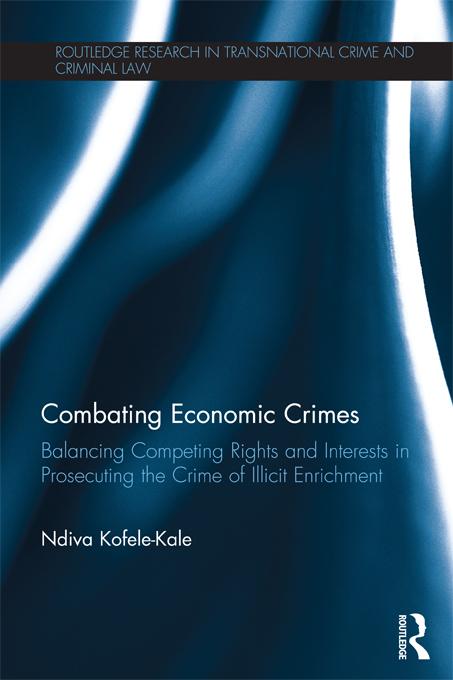
In the last decade a new tool has been developed in the global war against official corruption through the introduction of the offense of "illicit enrichment" in almost every multilateral anti-corruption convention. Illicit enrichment is defined in these conventions to include a reverse burden clause which triggers an automatic presumption that any public official found in "possession of inexplicable wealth" must have acquired it illicitly. However, the reversal of the burden of proof clauses raises an important human rights issue because they conflict with the accused individual’s right to be presumed innocent. Unfortunately, the recent spate of international legislation against official corruption provides no clear guidelines on how to proceed in balancing the right of the accused to be presumed innocent against the competing right of society to trace and recapture illicitly acquired national wealth.
Combating Economic Crimes
Pay easily by card, Klarna, Apple Pay or Google Pay. Not happy? You always have a 14-day money-back guarantee. Read more in our terms. If you have any questions, email us at hello@memmo.org.
Memmo makes studying easier – wherever you are in the world. We bring your course books and smart study tools together in one place: summaries, quizzes, podcasts and flashcards. Plus Ted, your study buddy who answers anything you wonder. Over 50,000 students already study here – built to help you learn faster and stress less.