
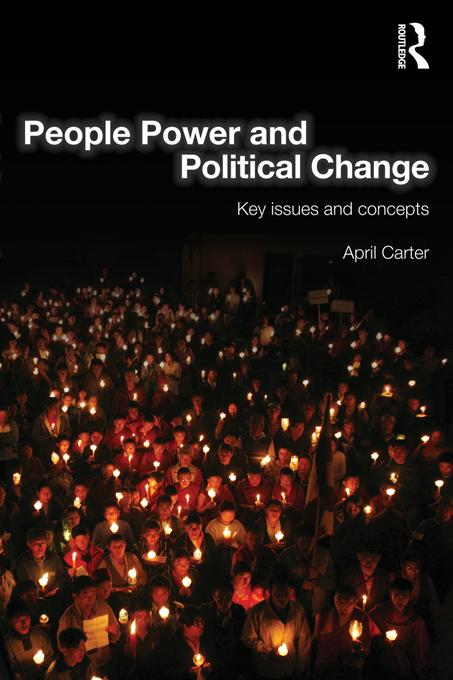
This book examines the upsurge in mass popular protest against undemocratic regimes. Relating early revolutions to recent global trends and protests, it examines the significance of ‘people power’ to democracy.
Taking a comparative approach, this text analyses unarmed uprisings in Iran 1977-79, Latin America and Asia in the 1980s, Africa from 1989-1992, 1989 in Eastern Europe and ex-Soviet states after 2000, right up to the 2011 ‘Arab Spring’. The author assesses the influence on people power of global politics and trends, such as the growth of international governmental organizations and international law, citizen networks operating across borders, and emerging media (like Twitter and Wikileaks). Although stressing the positive potential of people power, this text also examines crucial problems of repression, examples of failure and potential political problems, disintegration of empires and the role of power rivalries. Drawing from contemporary debates about democratization and literatures on power, violence and nonviolence, from both academic sources and media perspectives, this text builds an incisive analytical argument about the changing nature of power itself.
People Power and Political Change is a must read for students and scholars of democratic theory, international politics and current affairs.
Pay easily by card, Klarna, Apple Pay or Google Pay. Not happy? You always have a 14-day money-back guarantee. Read more in our terms. If you have any questions, email us at hello@memmo.org.
Memmo makes studying easier – wherever you are in the world. We bring your course books and smart study tools together in one place: summaries, quizzes, podcasts and flashcards. Plus Ted, your study buddy who answers anything you wonder. Over 50,000 students already study here – built to help you learn faster and stress less.