
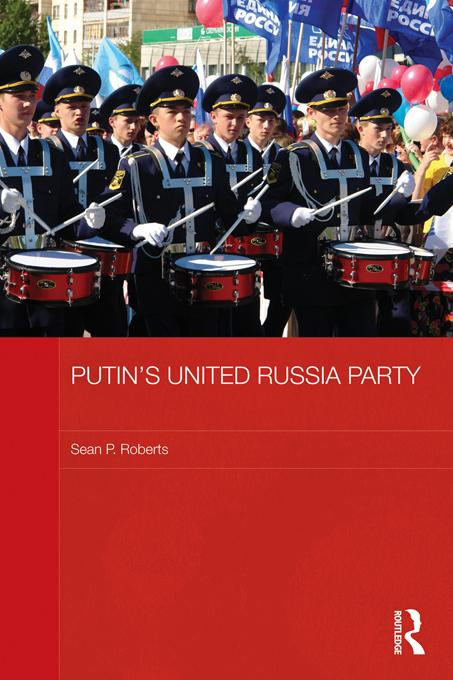
From its inception in 2001, the United Russia Party has rapidly developed into a hugely successful, organisationally-complex political party and key component of power. This book provides a much needed analysis on United Russia by exploring the role of the party in the Russian political system, from 2000 to 2010. It explores the party empirically, as an impressive organisation in its own right, but also theoretically, as an independent or explanatory variable able to illumine the larger development of dominant-power politics in Russia in the same period.
The book creates a model to understand the role of political parties in electorally-based political systems and shows how United Russia conforms to this model, and importantly, how the party also has unique features that affect its place in the political system. The book goes on to argue that United Russia represents a ‘virtual’ party hegemony, an outcome of political changes occurring elsewhere, and so a reversal of the typical relationship between parties and power found in comparative literature. This has potentially far reaching implications for our understanding of party dominance in the twenty-first century and also the sources of regime stability and instability.
Pay easily by card, Klarna, Apple Pay or Google Pay. Not happy? You always have a 14-day money-back guarantee. Read more in our terms. If you have any questions, email us at hello@memmo.org.
Memmo makes studying easier – wherever you are in the world. We bring your course books and smart study tools together in one place: summaries, quizzes, podcasts and flashcards. Plus Ted, your study buddy who answers anything you wonder. Over 50,000 students already study here – built to help you learn faster and stress less.