
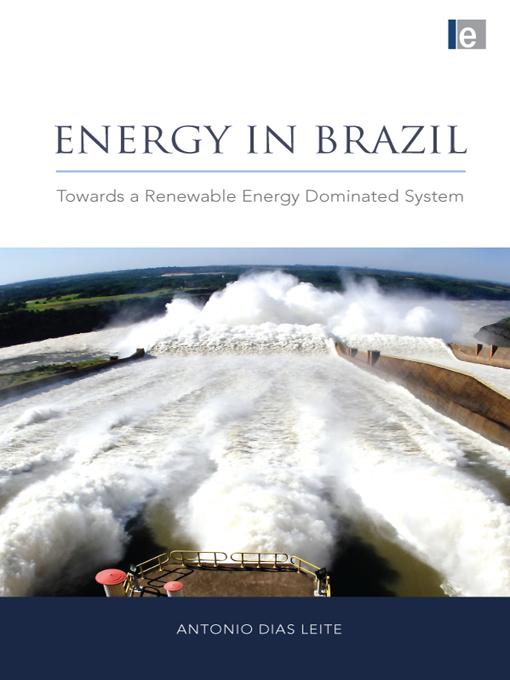
Rapidly developing countries such as China and India are the real main players in the climate debate, with the potential for massive increases in their carbon emissions in coming years. Brazil is often included in their number, yet this country is in fact notable for its exceptionally high reliance on energy from renewable sources - approaching 50%. However, the fact that much of this energy comes from hydropower and biofuels, and recent discoveries of massive oil reserves off of the Brazilian coast, are a recipe for controversy.
In this detailed account, Antonio Dias Leite sets out the development of Brazil's energy mix. Beginning with the history of energy provision and use, he then moves on to tackle the various sources in detail: hydropower, biomass and other renewables, as well as fossil fuels and nuclear power. In each case he examines growth, distribution, environmental and socio-economic issues (such as deforestation and displacement of indigenous communities) and potential for future development - highlighting what has worked, and what hasn't. The book ends by examining Brazilian approaches to energy efficiency, and by positioning Brazil in the world context.
This is a major contribution to the discussion around climate change mitigation that will be key reading for policymakers and researchers concerned with the future role and impacts of rapidly developing countries.
Pay easily by card, Klarna, Apple Pay or Google Pay. Not happy? You always have a 14-day money-back guarantee. Read more in our terms. If you have any questions, email us at hello@memmo.org.
Memmo makes studying easier – wherever you are in the world. We bring your course books and smart study tools together in one place: summaries, quizzes, podcasts and flashcards. Plus Ted, your study buddy who answers anything you wonder. Over 50,000 students already study here – built to help you learn faster and stress less.