
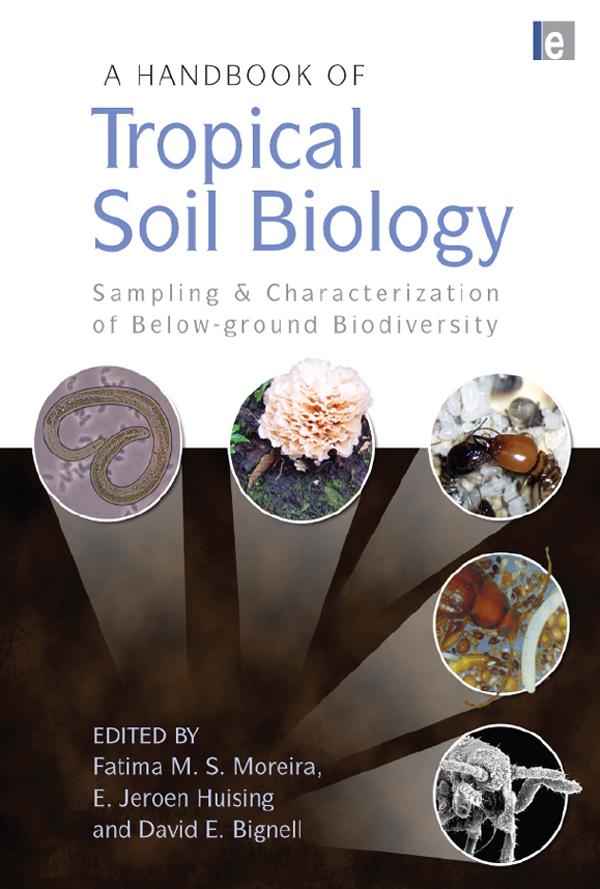
This practical handbook describes sampling and laboratory assessment methods for the biodiversity of a number of key functional groups of soil organisms, including insects, earthworms, nematodes, fungi and bacteria. The methods have been assembled and the protocols drafted by a number of scientists associated with the UNEP-GEF funded Conservation and Sustainable Management of Below-Ground Biodiversity Project, executed by the Tropical Soil Biology and Fertility (TSBF) Institute of the International Center for Tropical Agriculture (CIAT).
The methods provide a standardized basis for characterizing soil biodiversity and current land uses in terrestrial natural, semi-natural and agroecosystems in tropical forests and at forest margins. The aim is to assess soil biodiversity against current and historic land use practices both at plot and landscape scales and, further, to identify opportunities for improved sustainable land management through the introduction, management or remediation of soil biota, thus reducing the need for external inputs such as fertilizers and pesticides. The book also contains extensive advice on the handling of specimens and the allocation of organisms to strain or functional group type.
Published with TSBF-CIAT, CTA, UNEP and GEF
Pay easily by card, Klarna, Apple Pay or Google Pay. Not happy? You always have a 14-day money-back guarantee. Read more in our terms. If you have any questions, email us at hello@memmo.org.
Memmo makes studying easier – wherever you are in the world. We bring your course books and smart study tools together in one place: summaries, quizzes, podcasts and flashcards. Plus Ted, your study buddy who answers anything you wonder. Over 50,000 students already study here – built to help you learn faster and stress less.