
�With tens of millions of hectares and hundreds of millions of lives in the balance, the debate over who should control South Asia�s forests is of tremendous political significance. This book provides an insightful
and thorough assessment of important forest management transitions currently underway.�
MARK POFFENBERGER, EXECUTIVE DIRECTOR OF COMMUNITY FORESTRY INTERNATIONAL
�The contributions in this volume not only breathe life into the fi eld of writing and analysis related to forests, they do so on the strength of extraordinarily insightful research. Kudos to Springate-Baginski and Blaikie for providing us with a set of thoroughly researched, provocative studies that should be required reading not only for those interested in community forestry in south Asia, but in resource governance anywhere.� ARUN AGRAWAL, ASSOCIATE PROFESSOR OF NATURAL RESOURCES & ENVIRONMENT, UNIVERSITY OF MICHIGAN, USA
�Makes a significant contribution to theory and practice of participatory forest management.�
YAM MALLA, EXECUTIVE DIRECTOR, REGIONAL COMMUNITY FORESTRY TRAINING CENTER FOR ASIA AND THE PACIFIC, BANGKOK
�This excellent and timely book provides thought-provoking insights to the issues of power and politics in forestry and the difficulties of transforming age-old structures that circumscribe the access of the poor to forests and their resources; it challenges our assumptions of the benefits of participatory forest management and the role of forestry in poverty reduction. It should be of interest to policy-makers and to all those who have been involved with the struggle of transforming forestry over the decades.�
DR MARY HOBLEY, HOBLEY SHIELDS ASSOCIATES (NATURAL RESOURCE MANAGEMENT AND PLANNING CONSULTANCY)
�A rare combination of extensive field study, social science insights and policy studies � will be of immense value�
DR N. C. SAXENA, MEMBER OF NATIONAL ADVISORY COUNCIL, GOVERNMENT OF INDIA
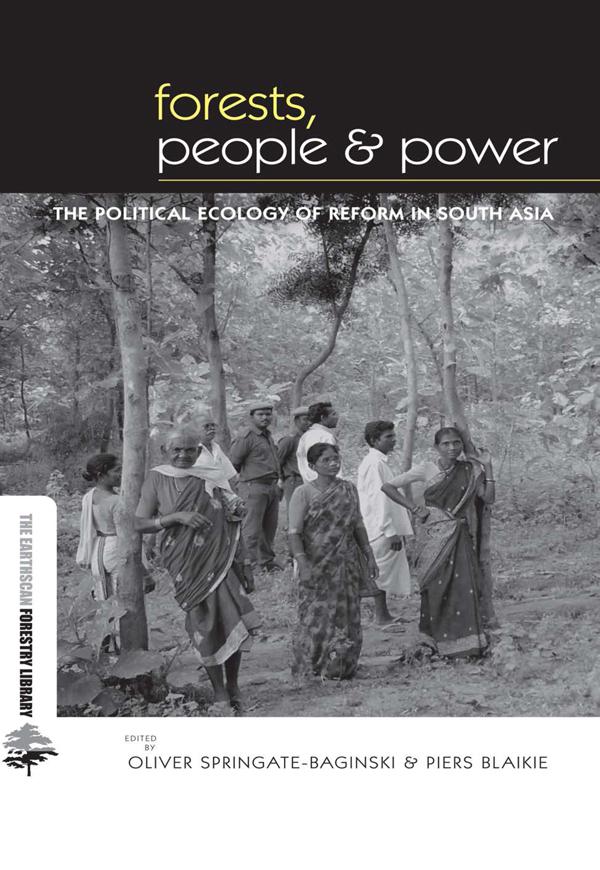
In recent decades �participatory� approaches to forest management have been introduced around the world. This book assesses their implementation in the highly politicized environments of India and Nepal. The authors critically examine the policy, implementation processes and causal factors affecting livelihood impacts. Considering narratives and field practice, with data from over 60 study villages and over 1000 household interviews, the book demonstrates why particular field outcomes have occurred and why policy reform often proves so difficult. Research findings on which the book is based are already influencing policy in India and Nepal, and the research and analysis have great relevance to forestry management in a wide range of countries.
Published with DFID.
Pay easily by card, Klarna, Apple Pay or Google Pay. Not happy? You always have a 14-day money-back guarantee. Read more in our terms. If you have any questions, email us at hello@memmo.org.
Memmo makes studying easier – wherever you are in the world. We bring your course books and smart study tools together in one place: summaries, quizzes, podcasts and flashcards. Plus Ted, your study buddy who answers anything you wonder. Over 50,000 students already study here – built to help you learn faster and stress less.