
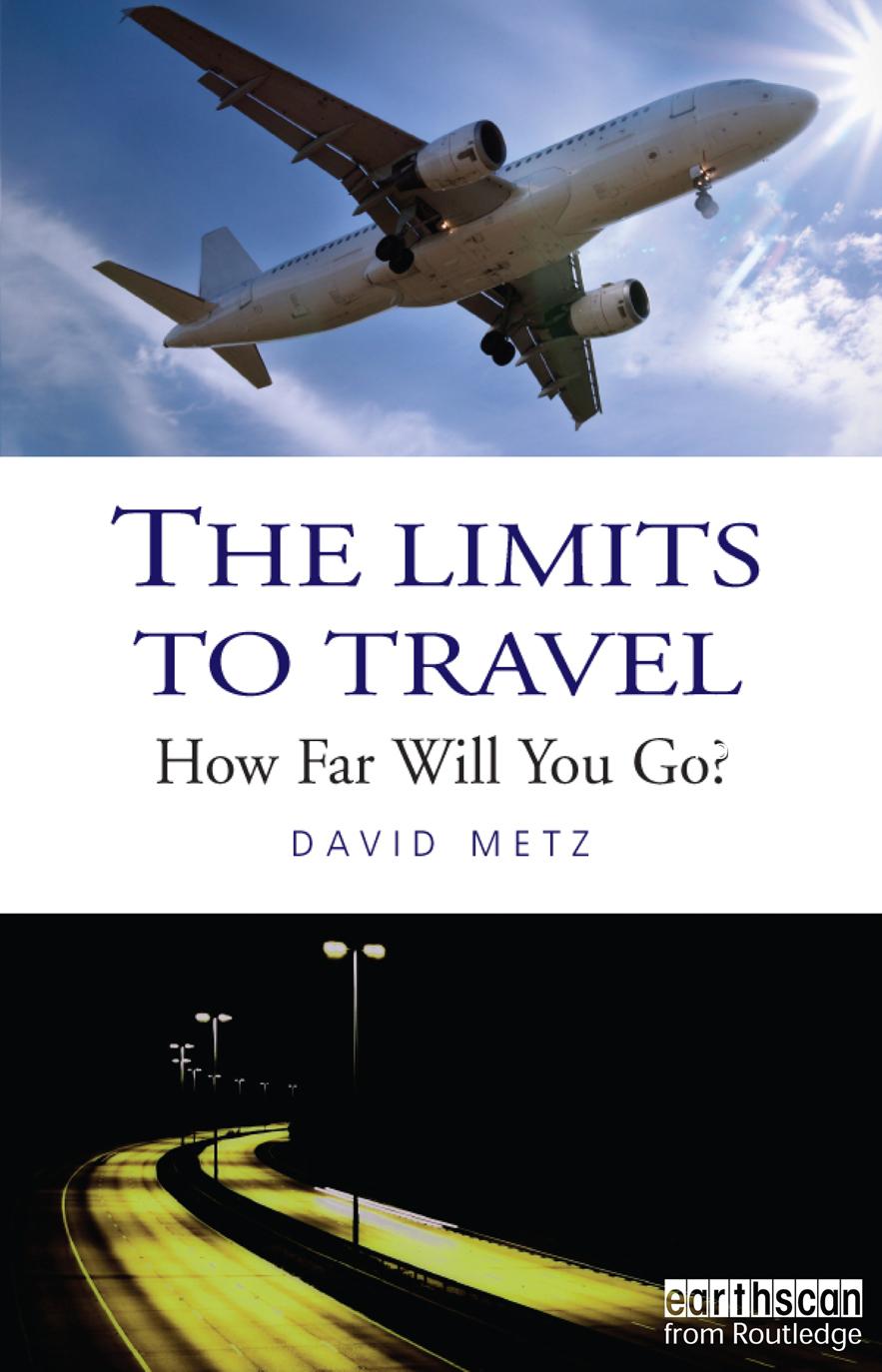
As affluence grows, it gets easier to travel faster and further. But research shows that, despite this, the average travel time in all societies remains steady at roughly an hour a day. The implication is that people are choosing to increase the distance they regularly travel, rather than opting for shorter journey times. While this clearly offers advantages in terms of reaching more desirable locations, the disadvantages are numerous - not least that of anthropogenic climate change, to which transport is the fastest growing contributor. However, the stability of travel time does not form part of the present conceptual framework of transport policy makers and professionals - consequently, misconceived decisions lead to unintended outcomes.
In this intriguing book, David Metz examines the inadequacies inherent in the current thinking, along with the resulting problems, such as pollution, congestion and noise. He highlights the impact of the rapid increase in car use in China and India, and explores the general travel experience, public vs. private transport, and transport technology. In considering to what extent travel could be avoided, he arrives at a new paradigm to underpin sustainable transport policies, based on the fundamental characteristics of human mobility and focusing on quality, not quantity, of travel.
Visit the Limits to Travel website at: http://www.limitstotravel.org.uk/
Pay easily by card, Klarna, Apple Pay or Google Pay. Not happy? You always have a 14-day money-back guarantee. Read more in our terms. If you have any questions, email us at hello@memmo.org.
Memmo makes studying easier – wherever you are in the world. We bring your course books and smart study tools together in one place: summaries, quizzes, podcasts and flashcards. Plus Ted, your study buddy who answers anything you wonder. Over 75,000 students already study here – built to help you learn faster and stress less.