
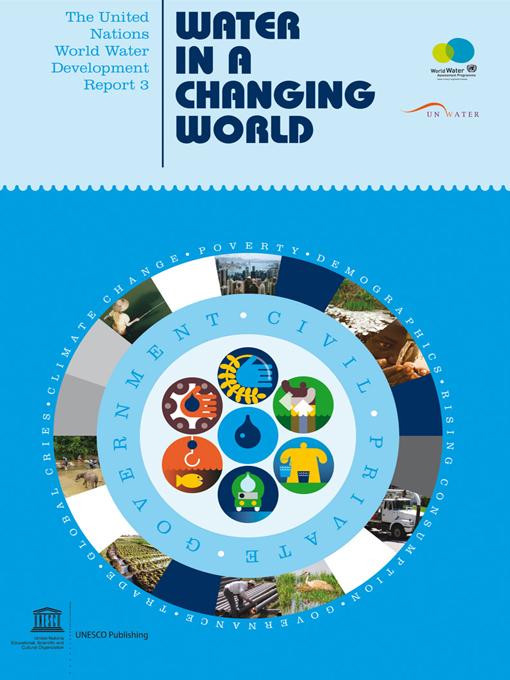
The United Nations World Water Development Report, published every three years, is a comprehensive review providing an authoritative picture of the state of the world's freshwater resources. It offers best practices as well as in-depth theoretical analyses to help stimulate ideas and actions for better stewardship in the water sector. It is the only report of its kind, resulting from the collaboration and contributions of the 26 UN agencies, commissions, program, funds, secretariats and conventions that have a significant role in addressing global water concerns.
The news media are full of talk of crises - in climate change, energy and food and troubled financial markets. These crises are linked to each other and to water resources management. Unresolved, they may lead to increasing political insecurity and conflict.
Water is required to meet our fundamental needs and rising living standards and to sustain our planet‘s fragile ecosystems. Pressures on the resource come from a growing and mobile population, social and cultural change, economic development and technological change. Adding complexity and risk is climate change, with impacts on the resource as well as on the sources of pressure on water.
The challenges, though substantial, are not insurmountable. The Report shows how some countries have responded. Progress in providing drinking water is heartening, with the Millennium Development Goal target on track in most regions. But other areas remain unaddressed, and after decades of inaction, the problems in water systems are enormous and will worsen if left unattended.
Leaders in the water sector can inform decisions outside their domain and manage water resources to achieve agreed socioeconomic objectives and environmental integrity. Leaders in government, the private sector and civil society determine these objectives and allocate human and financial resources to meet them. Recognizing this responsibility, they must act now!
Two volume set: 336
Pay easily by card, Klarna, Apple Pay or Google Pay. Not happy? You always have a 14-day money-back guarantee. Read more in our terms. If you have any questions, email us at hello@memmo.org.
Memmo makes studying easier – wherever you are in the world. We bring your course books and smart study tools together in one place: summaries, quizzes, podcasts and flashcards. Plus Ted, your study buddy who answers anything you wonder. Over 50,000 students already study here – built to help you learn faster and stress less.