
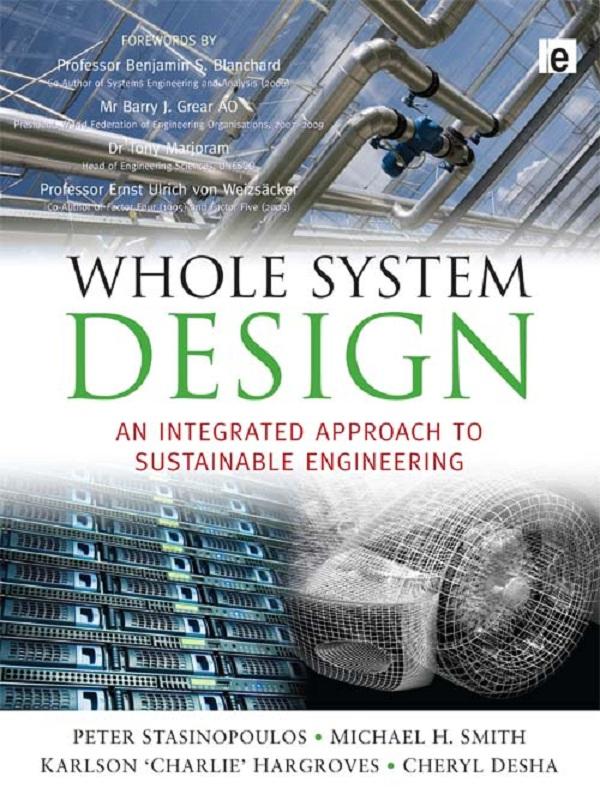
Whole System Design is increasingly being seen as one of the most cost-effective ways to both increase the productivity and reduce the negative environmental impacts of an engineered system.
A focus on design is critical, as the output from this stage of the project locks in most of the economic and environmental performance of the designed system throughout its life, which can span from a few years to many decades. Indeed, it is now widely acknowledged that all designers - particularly engineers, architects and industrial designers - need to be able to understand and implement a whole system design approach.
This book provides a clear design methodology, based on leading efforts in the field, and is supported by worked examples that demonstrate how advances in energy, materials and water productivity can be achieved through applying an integrated approach to sustainable engineering. Chapters 1-5 outline the approach and explain how it can be implemented to enhance the established Systems Engineering framework. Chapters 6-10 demonstrate, through detailed worked examples, the application of the approach to industrial pumping systems, passenger vehicles, electronics and computer systems, temperature control of buildings, and domestic water systems.
Published with The Natural Edge Project, the World Federation of Engineering Organizations, UNESCO and the Australian Government.
Pay easily by card, Klarna, Apple Pay or Google Pay. Not happy? You always have a 14-day money-back guarantee. Read more in our terms. If you have any questions, email us at hello@memmo.org.
Memmo makes studying easier – wherever you are in the world. We bring your course books and smart study tools together in one place: summaries, quizzes, podcasts and flashcards. Plus Ted, your study buddy who answers anything you wonder. Over 50,000 students already study here – built to help you learn faster and stress less.