
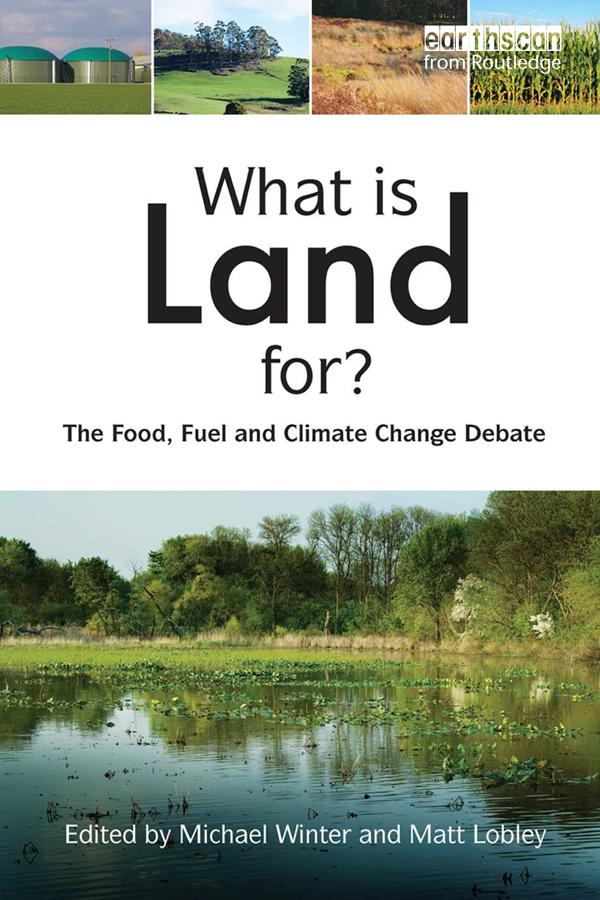
In recent decades agricultural commodity surpluses in the developed world have contributed to a mantra of 'land surplus' in which set-aside, extensification, alternative land uses and 'wilding' have been key terms in debates over land. Quite suddenly all this has changed as a consequence of rapidly shifting commodity markets. Prices for cereals, oil seeds and other globally traded commodities have risen sharply. A contributor to this has been the shift to bioenergy cropping, fuelled by concerns over post-peak oil and climate change. Agricultural supply chain interests have embraced the 'new environmentalism' of climate change with enthusiasm, proudly proclaiming the readiness of the industry to produce both food and energy crops, and to do so with a neo-liberal confidence in markets to determine the balance between food and non-food crops in land use.
But policy and politics have not necessarily caught up with these market and industry-led changes and some environmentalists are beginning to challenge the assumptions of the new 'productivism'. Is it necessarily the case, they ask, that agriculture's best contribution to tackling climate change is to grow bioenergy crops or invest in anaerobic-digesters or make land over for windfarms? Might not there be an equally important role in maximising the carbon sequestration or water-holding properties of biodiverse land? What is Land For? tackles these key cutting-edge issues of this new debate by setting out a baseline of evidence and ideas.
Pay easily by card, Klarna, Apple Pay or Google Pay. Not happy? You always have a 14-day money-back guarantee. Read more in our terms. If you have any questions, email us at hello@memmo.org.
Memmo makes studying easier – wherever you are in the world. We bring your course books and smart study tools together in one place: summaries, quizzes, podcasts and flashcards. Plus Ted, your study buddy who answers anything you wonder. Over 50,000 students already study here – built to help you learn faster and stress less.