
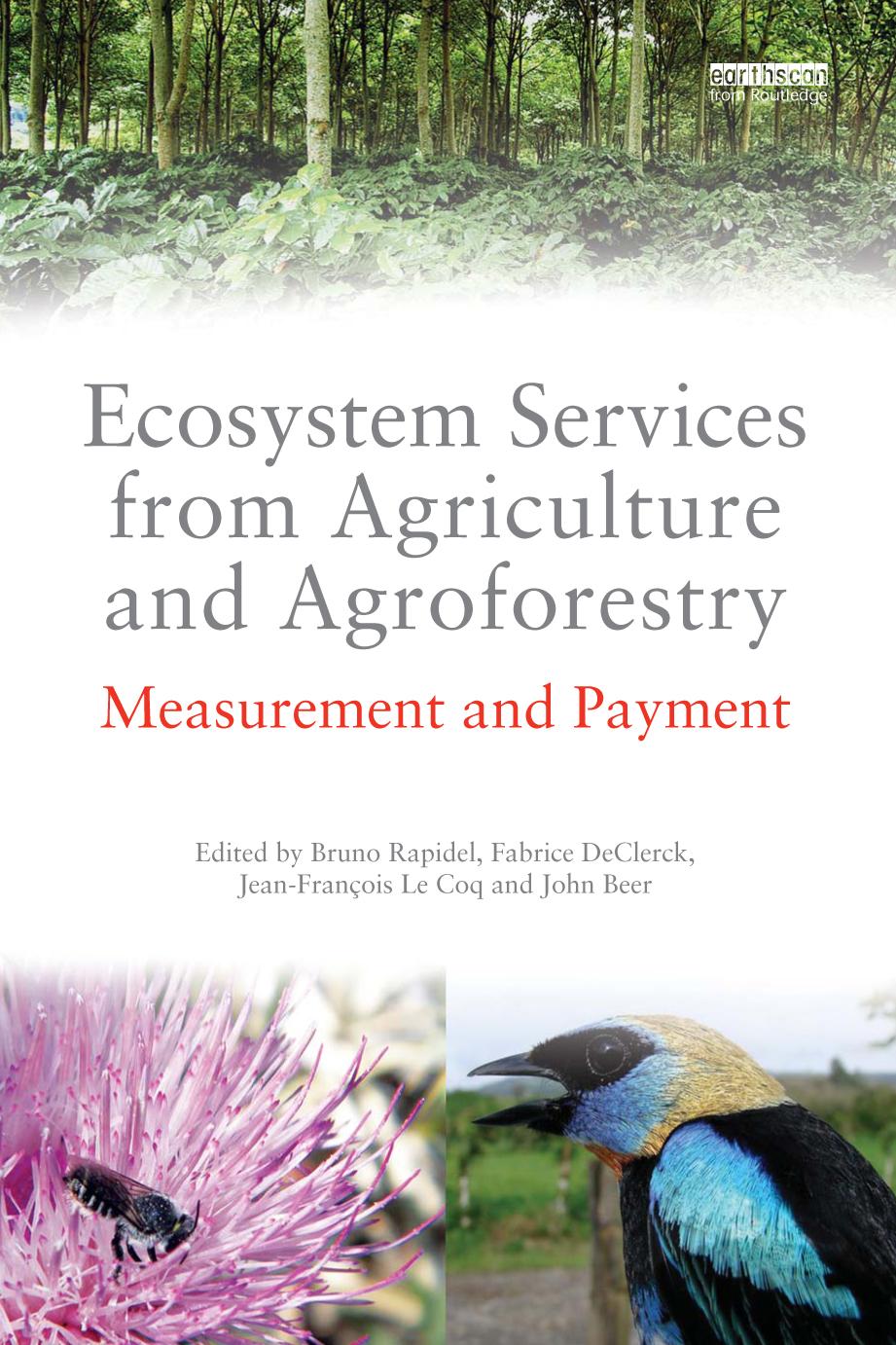
Agricultural systems are no longer evaluated solely on the basis of the food they provide, but also on their capacity to limit impacts on the environment, such as soil conservation, water quality and biodiversity conservation, as well as their contribution to mitigating and adapting to climate change. In order to cope with these multiple service functions, they must internalize the costs and benefits of their environmental impact. Payments for ecosystem services are hoped to encourage and promote sustainable practices via financial incentives.
The authors show that while the principle is straightforward, the practice is much more complicated. Whereas scenic beauty and protection of water sources provide benefits to the local population, carbon sequestration and biodiversity conservation can be considered international public goods, rendering potential payment schemes more complex. Few examples exist where national or international bodies have been able to set up viable mechanisms that compensate agricultural systems for the environmental services they provide. However this book provides several examples of successful programs, and aims to transfer them to other regions of the world. The authors show that a product can be sold if it is clearly quantified, there exists a means to determine the service's values, and there is a willing buyer.
The first two sections of the book present methodological issues related to the quantification and marketing of ecosystem services from agriculture, including agroforestry. The third and final section presents case studies of practical payments for ecosystem services and experiences in Central and South America, and draws some lessons learnt for effective and sustainable development of ecosystem services compensation mechanisms.
Pay easily by card, Klarna, Apple Pay or Google Pay. Not happy? You always have a 14-day money-back guarantee. Read more in our terms. If you have any questions, email us at hello@memmo.org.
Memmo makes studying easier – wherever you are in the world. We bring your course books and smart study tools together in one place: summaries, quizzes, podcasts and flashcards. Plus Ted, your study buddy who answers anything you wonder. Over 50,000 students already study here – built to help you learn faster and stress less.