
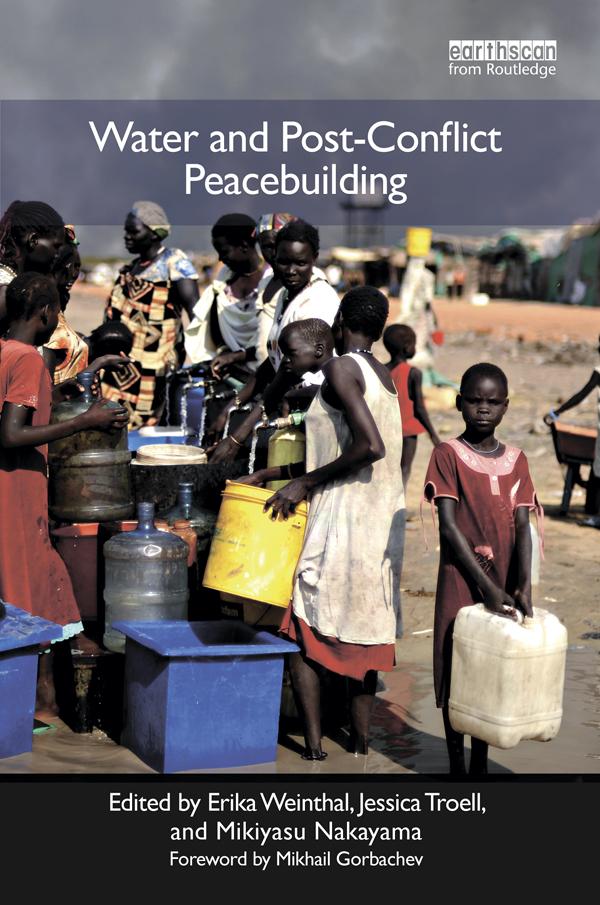
Water is a basic human need, and despite predictions of "water wars," shared waters have proven to be the natural resource with the greatest potential for interstate cooperation and local confidence building. Indeed, water management plays a singularly important role in rebuilding trust after conflict and in preventing a return to conflict.
Featuring nineteen case studies and analyses of experiences from twenty eight countries and territories in Africa, Asia, Europe, the Americas, and the Middle East, and drawing on the experiences of thirty-five researchers and practitioners from around the world, this book creates a framework for understanding how decisions governing water resources in post-conflict settings can facilitate or undermine peacebuilding. The lessons will be of value to practitioners in international development and humanitarian initiatives, policy makers, students, and others interested in post-conflict peacebuilding and the nexus between water management and conflict.
Water and Post-Conflict Peacebuilding is part of a global initiative to identify and analyze lessons in post-conflict peacebuilding and natural resource management. The project has generated six edited books of case studies and analyses, with contributions from practitioners, policy makers, and researchers. Other books in this series address high-value resources, land, livelihoods, assessing and restoring natural resources, and governance.
Pay easily by card, Klarna, Apple Pay or Google Pay. Not happy? You always have a 14-day money-back guarantee. Read more in our terms. If you have any questions, email us at hello@memmo.org.
Memmo makes studying easier – wherever you are in the world. We bring your course books and smart study tools together in one place: summaries, quizzes, podcasts and flashcards. Plus Ted, your study buddy who answers anything you wonder. Over 50,000 students already study here – built to help you learn faster and stress less.