
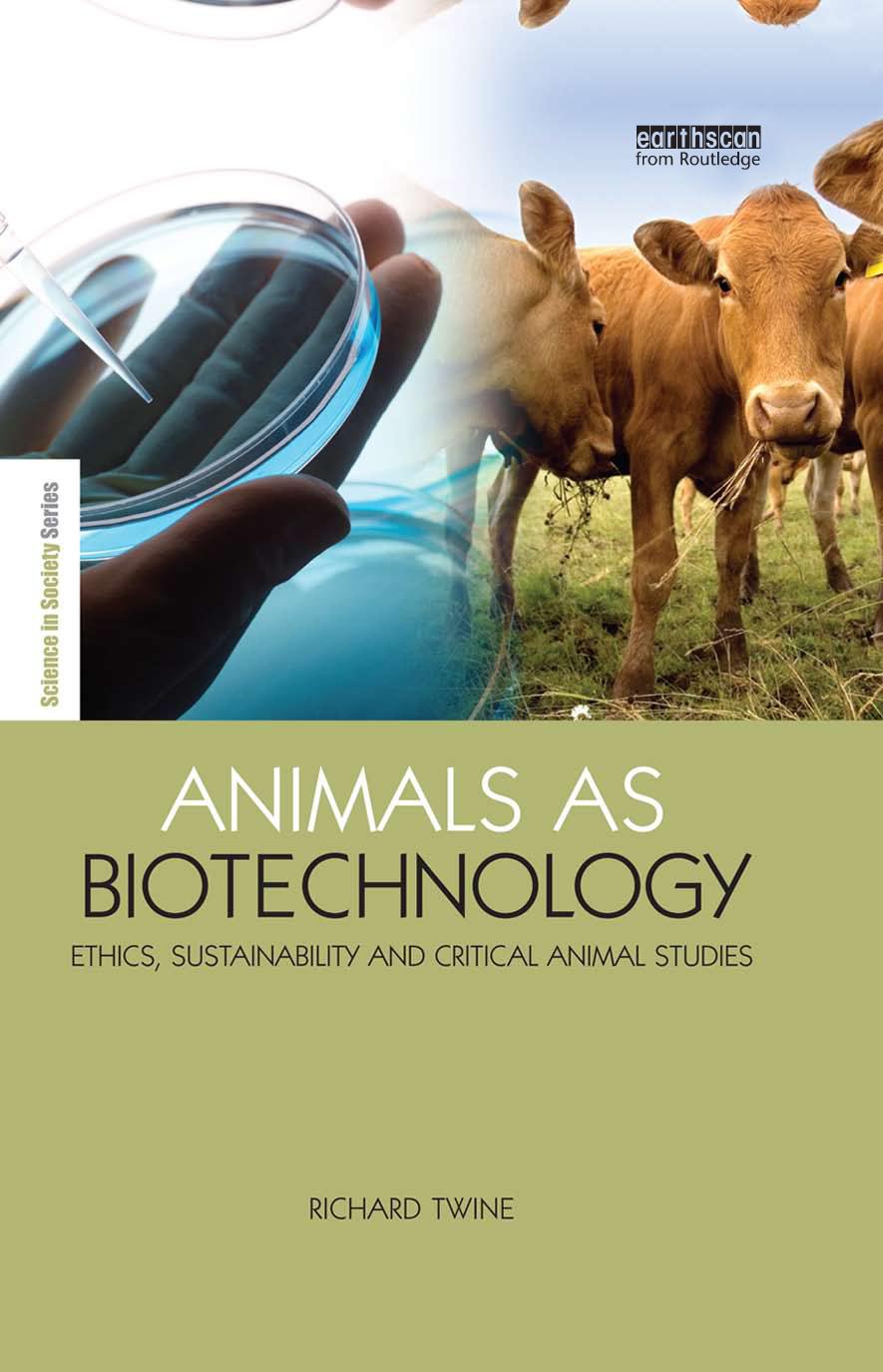
In Animals as Biotechnology sociologist Richard Twine places the question of human/animal relations at the heart of sustainability and climate change debates. The book is shaped by the emergence of two contradictory trends within our approach to nonhuman animals: the biotechnological turn in animal sciences, which aims to increase the efficiency and profitability of meat and dairy production; and the emerging field of critical animal studies - mostly in the humanities and social sciences - which works to question the nature of our relations with other animals.
The first part of the book focuses on ethics, examining critically the dominant paradigms of bioethics and power relations between human and non-human. The second part considers animal biotechnology and political economy, examining commercialisation and regulation. The final part of the book centres on discussions of sustainability, limits and an examination of the prospects for animal ethics if biotechnology becomes part of the dominant agricultural paradigm. Twine concludes by considering whether growing calls to reduce our consumption of meat/dairy products in the face of climate change threats are in fact complicit with an anthropocentric understanding of sustainability and that what is needed is a more fundamental ethical and political questioning of relations and distinctions between humans, animals and nature.
Pay easily by card, Klarna, Apple Pay or Google Pay. Not happy? You always have a 14-day money-back guarantee. Read more in our terms. If you have any questions, email us at hello@memmo.org.
Memmo makes studying easier – wherever you are in the world. We bring your course books and smart study tools together in one place: summaries, quizzes, podcasts and flashcards. Plus Ted, your study buddy who answers anything you wonder. Over 50,000 students already study here – built to help you learn faster and stress less.