
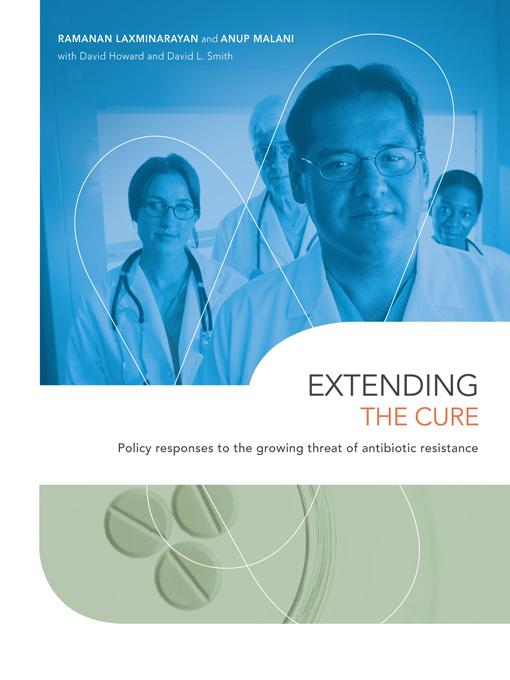
Our ability to treat common bacterial infections with antibiotics goes back only 65 years. However, the authors of this report make it clear that sustaining a supply of effective and affordable antibiotics cannot be without changes to the incentives facing patients, physicians, hospitals, insurers, and pharmaceutical manufacturers. In fact, increasing resistance to these drugs is already exacting a terrible price. Every day in the United States, approximately 172 men, women, and children die from infections caused by antibiotic-resistant bacteria in hospitals alone. Beyond those deaths, antibiotic resistance is costing billions of dollars through prolonged hospital stays and the need for doctors to resort to ever more costly drugs to use as substitute treatments.
Extending the Cure presents the problem of antibiotic resistance as a conflict between individual decision makers and their short-term interest and the interest of society as a whole, in both present and future: The effort that doctors make to please each patient by prescribing a drug when it might not be properly indicated, poor monitoring of discharged patients to ensure that they do not transmit drug-resistant pathogens to other persons, excesses in the marketing of new antibiotics, and the broad overuse of antibiotics all contribute to the development and spread of antibiotic-resistant bacteria. The book explores a range of policy options that would encourage patients, health care providers, and managed care organizations to serve as more responsible stewards of existing antibiotics as well as proposals that would give pharmaceutical firms greater incentives to develop new antibiotics and avoid overselling. If the problem continues unaddressed, antibiotic resistance has the potential to derail the health care system and return us to a world where people of all ages routinely die from simple infections. As a basis for future research and a spur to a critically important dialogue, Extending the Cure is a fundamental first step in addressing this public health crisis.
The Extending the Cure project is funded in part by the Robert Wood Johnson Foundation through its Pioneer Portfolio.
Pay easily by card, Klarna, Apple Pay or Google Pay. Not happy? You always have a 14-day money-back guarantee. Read more in our terms. If you have any questions, email us at hello@memmo.org.
Memmo makes studying easier – wherever you are in the world. We bring your course books and smart study tools together in one place: summaries, quizzes, podcasts and flashcards. Plus Ted, your study buddy who answers anything you wonder. Over 50,000 students already study here – built to help you learn faster and stress less.