
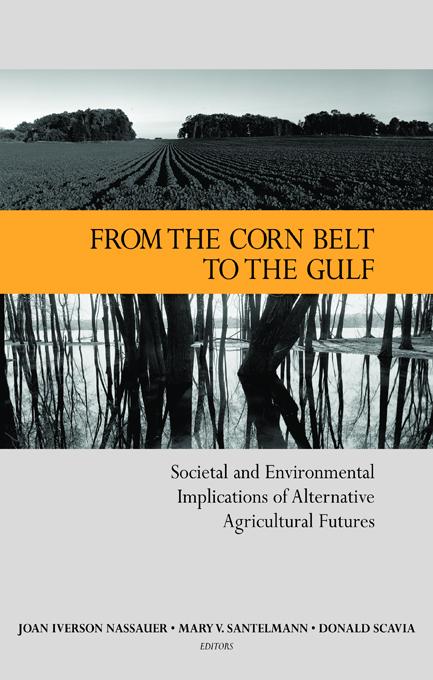
Nutrients from farms in the Mississippi River Basin are the leading cause of the Gulf of Mexico‘s 'Dead Zone,' a 5,000 to 7,000 square mile region where declining oxygen levels are threatening the survival of marine life. From the Corn Belt to the Gulf explores how new agricultural policy can help alleviate this problem, and at the same time improve water quality overall, enhance biodiversity, improve the quality of life for the people who live and work in Corn Belt communities, and relieve downstream flooding. The themes of the book are the far-reaching environmental impacts of Corn Belt agriculture, including associated economic and social effects at multiple spatial scales - and the potential for future agricultural policy to address those impacts through changes in agricultural landscapes and practices. We know that the environmental 'footprint' of Corn Belt agriculture extends beyond farmland and adjacent lakes and streams to groundwater, rivers, cities downstream, into the Gulf of Mexico, and, ultimately, to global oceanic and atmospheric systems. And we acknowledge that agricultural policies, including commodity support payments, have economic impacts at the national and international levels. Pressing negotiations with America‘s trade partners, along with increasing societal attention to both the costs and environmental effects of current agricultural policy, are creating momentum for policy change.
From the Corn Belt to the Gulf presents innovative, integrated assessments of the agriculture and ecological systems in the Mississippi River Basin along with studies of local Iowa agricultural watersheds. Contributors from multiple academic and professional disciplines discuss how agricultural policies have contributed to current environmental conditions, and, in what the authors term 'alternative futures' for agricultural landscapes, envision how new policy can help achieve more beneficial patterns.
Pay easily by card, Klarna, Apple Pay or Google Pay. Not happy? You always have a 14-day money-back guarantee. Read more in our terms. If you have any questions, email us at hello@memmo.org.
Memmo makes studying easier – wherever you are in the world. We bring your course books and smart study tools together in one place: summaries, quizzes, podcasts and flashcards. Plus Ted, your study buddy who answers anything you wonder. Over 50,000 students already study here – built to help you learn faster and stress less.