
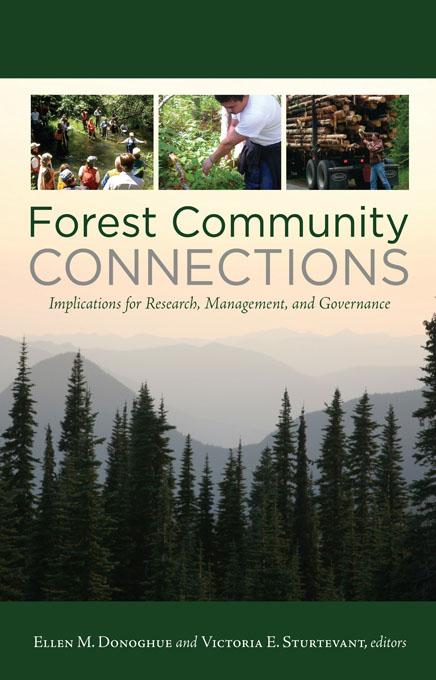
The connections between communities and forests are complex and evolving, presenting challenges to forest managers, researchers, and communities themselves. Dependency on timber extraction and timber-related industries is no longer a universal characteristic of the forest community. Remoteness is also a less common feature, as technology, workforce mobility, tourism, and 'amenity migrants' increasingly connect rural to urban places.
Forest Community Connections explores the responses of forest communities to a changing economy, changing federal policy, and concerns about forest health from both within and outside forest communities. Focusing primarily on the United States, the book examines the ways that social scientists work with communities-their role in facilitating social learning, informing policy decisions, and contributing to community well being. Bringing perspectives from sociology, anthropology, political science, and forestry, the authors review a range of management issues, including wildfire risk, forest restoration, labor force capacity, and the growing demand for a growing variety of forest goods and services. They examine the increasingly diverse aesthetic and cultural values that forest residents attribute to forests, the factors that contribute to strong and resilient connections between communities and forests, and consider a range of governance structures to positively influence the well being of forest communities and forests, including collaboration and community-based forestry.
Pay easily by card, Klarna, Apple Pay or Google Pay. Not happy? You always have a 14-day money-back guarantee. Read more in our terms. If you have any questions, email us at hello@memmo.org.
Memmo makes studying easier – wherever you are in the world. We bring your course books and smart study tools together in one place: summaries, quizzes, podcasts and flashcards. Plus Ted, your study buddy who answers anything you wonder. Over 50,000 students already study here – built to help you learn faster and stress less.