
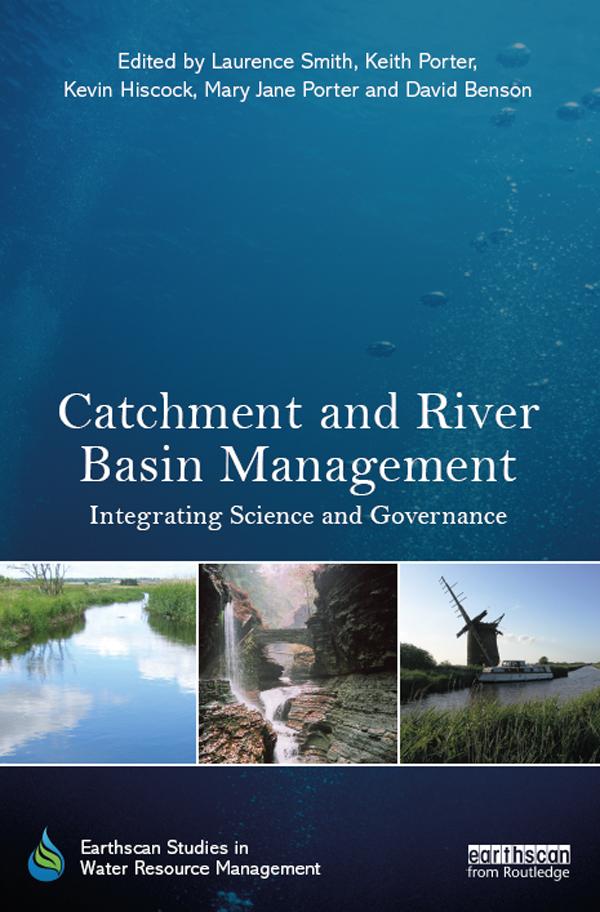
The central focus of this volume is a critical comparative analysis of the key drivers for water resource management and the provision of clean water – governance systems and institutional and legal arrangements. The authors present a systematic analysis of case study river systems drawn from Australia, Denmark, Germany, the Netherlands, UK and USA to provide an integrated global assessment of the scale and key features of catchment management.
A key premise explored is that despite the diversity of jurisdictions and catchments there are commonalities to a successful approach. The authors show that environmental and public health water quality criteria must be integrated with the economic and social goals of those affected, necessitating a 'twin-track' and holistic (cross-sector and discipline) approach of stakeholder engagement and sound scientific research.
A final synthesis presents a set of principles for adaptive catchment management. These principles demonstrate how to integrate the best scientific and technical knowledge with policy, governance and legal provisions. It is shown how decision-making and implementation at the appropriate geographic and governmental scales can resolve conflicts and share best sustainable practices.
Pay easily by card, Klarna, Apple Pay or Google Pay. Not happy? You always have a 14-day money-back guarantee. Read more in our terms. If you have any questions, email us at hello@memmo.org.
Memmo makes studying easier – wherever you are in the world. We bring your course books and smart study tools together in one place: summaries, quizzes, podcasts and flashcards. Plus Ted, your study buddy who answers anything you wonder. Over 50,000 students already study here – built to help you learn faster and stress less.