
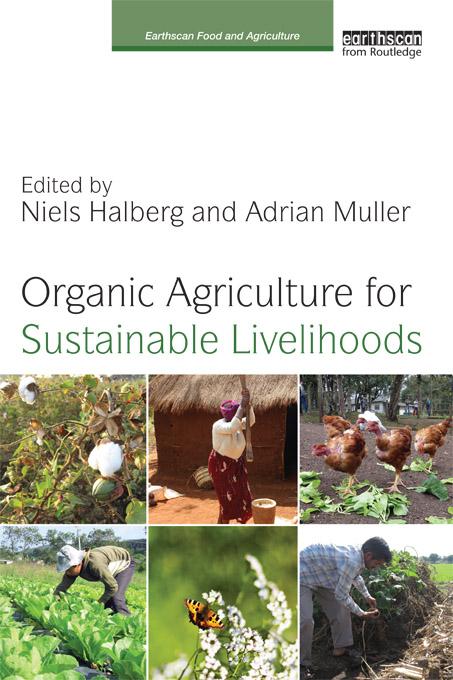
This book provides a timely analysis and assessment of the potential of organic agriculture (OA) for rural development and the improvement of livelihoods. It focuses on smallholders in developing countries and in countries of economic transition, but there is also coverage of and comparisons with developed countries. It covers market-oriented approaches and challenges for OA as part of high value chains and as an agro-ecologically based development for improving food security. It demonstrates the often unrecognised roles that organic farming can play in climate change, food security and sovereignty, carbon sequestration, cost internalisations, ecosystems services, human health and the restoration of degraded landscapes.
The chapters specifically provide readers with:
- an overview of the state of research on OA from socio-economic, environmental and agro-ecological perspectives
- an analysis of the current and potential role of OA in improving livelihoods of farmers, in sustainable value chain development, and in implementation of agro-ecological methods
- proposed strategies for exploiting and improving the potential of OA and overcoming the constraints for further development
- a review of the strengths and weaknesses of OA in a sustainable development context
Pay easily by card, Klarna, Apple Pay or Google Pay. Not happy? You always have a 14-day money-back guarantee. Read more in our terms. If you have any questions, email us at hello@memmo.org.
Memmo makes studying easier – wherever you are in the world. We bring your course books and smart study tools together in one place: summaries, quizzes, podcasts and flashcards. Plus Ted, your study buddy who answers anything you wonder. Over 50,000 students already study here – built to help you learn faster and stress less.