
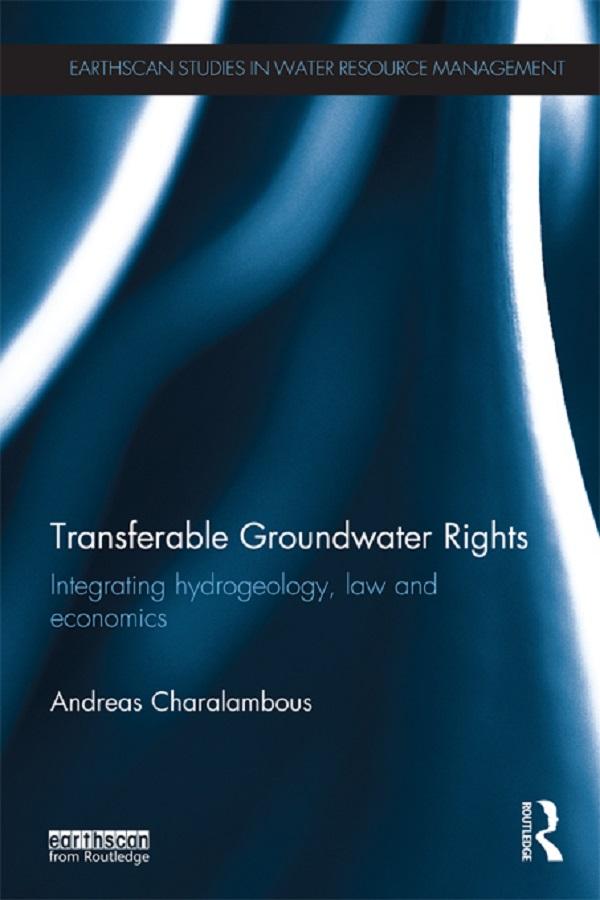
The principle of transferable groundwater rights is that by making water rights capable of being traded in the market, water resources can be used more sustainably and efficiently. Groundwater would achieve its economic value, by switching from the high volume-low value irrigation, which is prevalent with many farmers, particularly in South Asia, to low volume-high value urban supply or the growing of intensive horticultural or cash crops.
This book discusses transferable groundwater rights in their broader context. It starts with a detailed description of the physical aspects of groundwater, which non-technical readers should find useful, followed by a discussion of legal and economic aspects. Water transfers and the international experiences in transferable groundwater rights are dealt with in detail in two subsequent chapters. A model is presented to guide those involved in water resources management and planning in their decision process to introduce transferable groundwater rights and water rights trading.
The author concludes that transferable groundwater rights potentially offer a better alternative to land-based water rights systems. However, he casts serious doubt on whether groundwater rights trading on its own can achieve water resources sustainability, environmental protection and social equity. Government intervention seems to be almost always needed to assist the water rights market and take responsibility for any of its adverse consequences.
Pay easily by card, Klarna, Apple Pay or Google Pay. Not happy? You always have a 14-day money-back guarantee. Read more in our terms. If you have any questions, email us at hello@memmo.org.
Memmo makes studying easier – wherever you are in the world. We bring your course books and smart study tools together in one place: summaries, quizzes, podcasts and flashcards. Plus Ted, your study buddy who answers anything you wonder. Over 50,000 students already study here – built to help you learn faster and stress less.