
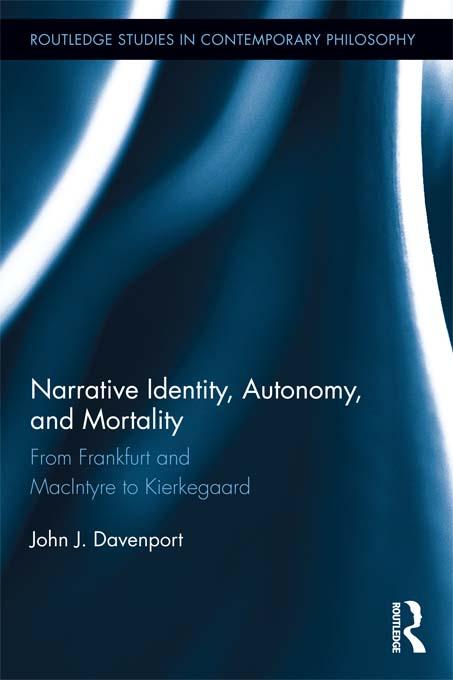
In the last two decades, interest in narrative conceptions of identity has grown exponentially, though there is little agreement about what a "life-narrative" might be. In connecting Kierkegaard with virtue ethics, several scholars have recently argued that narrative models of selves and MacIntyre's concept of the unity of a life help make sense of Kierkegaard's existential stages and, in particular, explain the transition from "aesthetic" to "ethical" modes of life. But others have recently raised difficult questions both for these readings of Kierkegaard and for narrative accounts of identity that draw on the work of MacIntyre in general. While some of these objections concern a strong kind of unity or "wholeheartedness" among an agent's long-term goals or cares, the fundamental objection raised by critics is that personal identity cannot be a narrative, since stories are artifacts made by persons. In this book, Davenport defends the narrative approach to practical identity and autonomy in general, and to Kierkegaard's stages in particular.
Pay easily by card, Klarna, Apple Pay or Google Pay. Not happy? You always have a 14-day money-back guarantee. Read more in our terms. If you have any questions, email us at hello@memmo.org.
Memmo makes studying easier – wherever you are in the world. We bring your course books and smart study tools together in one place: summaries, quizzes, podcasts and flashcards. Plus Ted, your study buddy who answers anything you wonder. Over 50,000 students already study here – built to help you learn faster and stress less.