
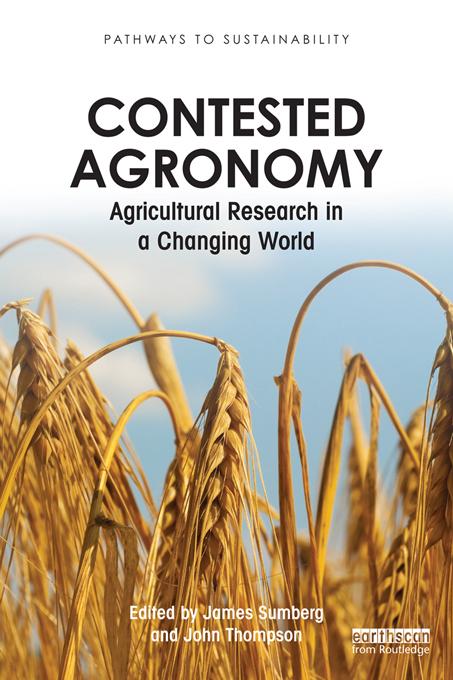
The dramatic increases in food prices experienced over the last four years, and their effects of hunger and food insecurity, as well as human-induced climate change and its implications for agriculture, food production and food security, are key topics within the field of agronomy and agricultural research. Contested Agronomy addresses these issues by exploring key developments since the mid-1970s, focusing in particular on the emergence of the neoliberal project and the rise of the participation and environmental agendas, taking into consideration how these have had profound impacts on the practice of agronomic research in the developing world especially over the last four decades. This book explores, through a series of case studies, the basis for a much needed ‘political agronomy’ analysis that highlights the impacts of problem framing and narratives, historical disjunctures, epistemic communities and the increasing pressure to demonstrate ‘success’ on both agricultural research and the farmers, processors and consumers it is meant to serve.
Whilst being a fascinating and thought-provoking read for professionals in the Agriculture and Environmental sciences, it will also appeal to students and researchers in agricultural policy, development studies, geography, public administration, rural sociology, and science and technology studies.
Pay easily by card, Klarna, Apple Pay or Google Pay. Not happy? You always have a 14-day money-back guarantee. Read more in our terms. If you have any questions, email us at hello@memmo.org.
Memmo makes studying easier – wherever you are in the world. We bring your course books and smart study tools together in one place: summaries, quizzes, podcasts and flashcards. Plus Ted, your study buddy who answers anything you wonder. Over 50,000 students already study here – built to help you learn faster and stress less.