
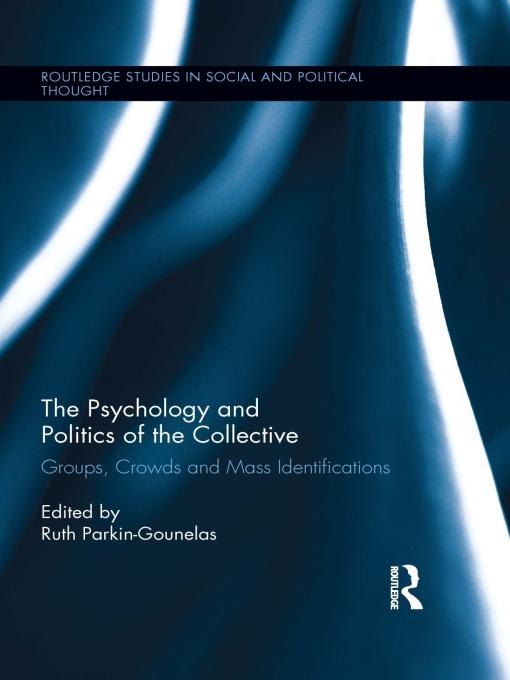
What are the psychological factors in operation when we form groups or crowds, and how are these affected by socio-historical circumstances? History offers endless examples of different forms of human collectivity, both private and public, small-scale and large: from the primal horde to the modern nuclear family, from the Athenian polis to virtual internet communities. Within the context of shifting social bonds in global culture, this book brings together debates on the left from political philosophy, psychoanalysis, social psychology and media and cultural studies to explore the logic of the formation of collective identities from a new theoretical perspective. Challenging liberal-capitalist models of individualism, as well as postmodern identity politics, analysts here turn to Continental philosophy (Lacan, Derrida, Agamben, Laclau, Badiou, among others) in order to re-think collectivity in relation to questions of agency, alterity, affect, sovereignty, the national imaginary and the biopolitical. In the aftermath of the great mass movements of the twentieth century (Marxist-Leninism, Mao), which resulted in bureaucratic submission and the cult of the State, the fate of our collective identity today raises urgent questions about the future of collaborative activity, the role of mediating institutions in shaping mass psychology, what is at stake in a radical democracy, and what happens in a crowd.
Pay easily by card, Klarna, Apple Pay or Google Pay. Not happy? You always have a 14-day money-back guarantee. Read more in our terms. If you have any questions, email us at hello@memmo.org.
Memmo makes studying easier – wherever you are in the world. We bring your course books and smart study tools together in one place: summaries, quizzes, podcasts and flashcards. Plus Ted, your study buddy who answers anything you wonder. Over 50,000 students already study here – built to help you learn faster and stress less.