
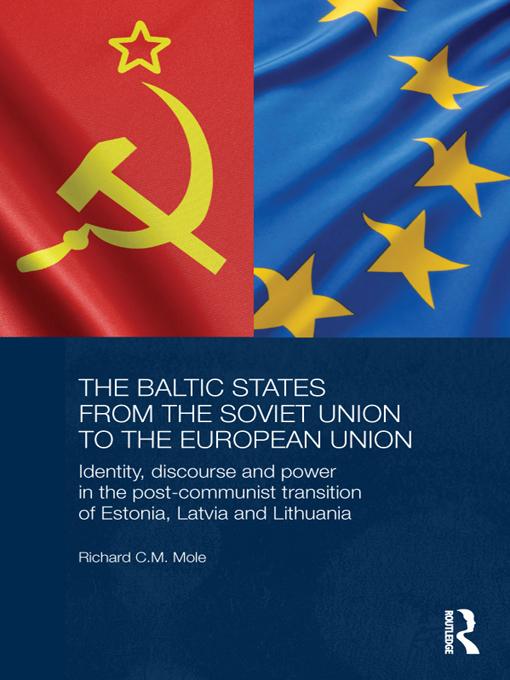
The Baltic States are unique in being the only member-states of the EU to have fought to regain their sovereignty from the Soviet Union, only then to cede it to Brussels in certain key areas. Similarly, no member-states have had to struggle as hard as Estonia, Latvia and Lithuania to preserve their identity after fifty years of Soviet nationality policy in the face of sub-state and supra-state challenges. The post-communist experience of the Baltic States thus allows us to examine debates about identity as a source of political power; the conditioning and constraining influence of identity discourses on social, political and economic change; and the orientation and outcome of their external relations. In particular, the book examines the impact of Russian and Soviet control of Estonia, Latvia and Lithuania; the Baltic independence movements of the late 1980s/early 1990s; the citizenship debates; relations with Russia vis-à-vis the withdrawal of the troops of the former Soviet Army; drawing of the shared boundary and the rights of Russian-speaking minorities as well as the efforts undertaken by the three Baltic States to rebuild themselves, modernise their economies, cope with the ensuing social changes and facilitate their accession to the EU and NATO.
Pay easily by card, Klarna, Apple Pay or Google Pay. Not happy? You always have a 14-day money-back guarantee. Read more in our terms. If you have any questions, email us at hello@memmo.org.
Memmo makes studying easier – wherever you are in the world. We bring your course books and smart study tools together in one place: summaries, quizzes, podcasts and flashcards. Plus Ted, your study buddy who answers anything you wonder. Over 50,000 students already study here – built to help you learn faster and stress less.