
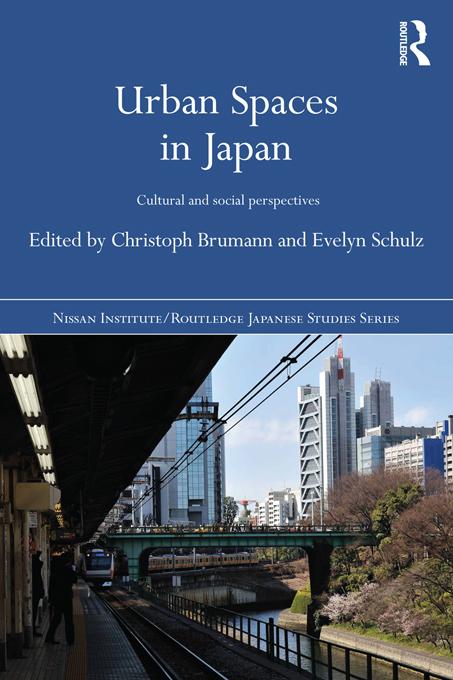
Urban Spaces in Japan explores the workings of power, money and the public interest in the planning and design of Japanese space. Through a set of vivid case studies of well-known Japanese cities including Tokyo, Kobe, and Kyoto, this book examines the potential of civil society in contemporary planning debates. Further, it addresses the implications of Japan's biggest social problem – the demographic decline – for Japanese cities, and demonstrates the serious challenges and exciting possibilities that result from the impending end of Japan's urban growth.
Presenting a synthetic approach that reflects both the physical aspects and the social significance of urban spaces, this book scrutinizes the precise patterns of urban expansion and shrinkage. In doing so, it also summarizes current theories of public space, urban space, and the body in space which are relevant to both Japan and the wider international debate.
With detailed case studies and more general reflections from a broad range of disciplines, this collection of essays demonstrates the value of cross-disciplinary cooperation. As such, it is of interest to students and scholars of geography and urban planning as well as history, anthropology and cultural studies.
Pay easily by card, Klarna, Apple Pay or Google Pay. Not happy? You always have a 14-day money-back guarantee. Read more in our terms. If you have any questions, email us at hello@memmo.org.
Memmo makes studying easier – wherever you are in the world. We bring your course books and smart study tools together in one place: summaries, quizzes, podcasts and flashcards. Plus Ted, your study buddy who answers anything you wonder. Over 75,000 students already study here – built to help you learn faster and stress less.