
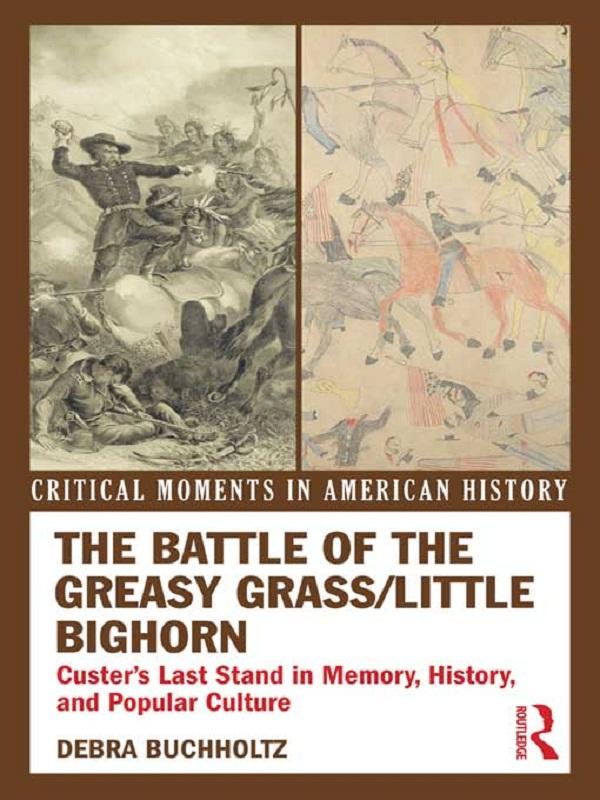
In June of 1876, the U.S. government’s plan to pressure the Lakota and Cheyenne people onto reservations came to a dramatic and violent end with a battle that would become enshrined in American memory. In the eyes of many Americans at the time, the Battle of Little Bighorn represented a symbolic struggle between the civilized and the savage. Known as the Battle of the Greasy Grass to the Lakota, the Battle of Little Bighorn to the people who suppressed them, and as Custer’s Last Stand in the annals of popular culture, the event continues to captivate students of American history.
In The Battle of Little Bighorn, Debra Buchholtz narrates the history of the battle and critically examines the legacy it has left. Through government documents, newspaper articles, and eyewitness accounts, Buchholtz situates the material and symbolic impact of the battle at the time. Using popular film and cultural references, she investigates the ways in which the wake of the event continues to shape the way students understand indigenous peoples, the Wild West, and the history of America.
Pay easily by card, Klarna, Apple Pay or Google Pay. Not happy? You always have a 14-day money-back guarantee. Read more in our terms. If you have any questions, email us at hello@memmo.org.
Memmo makes studying easier – wherever you are in the world. We bring your course books and smart study tools together in one place: summaries, quizzes, podcasts and flashcards. Plus Ted, your study buddy who answers anything you wonder. Over 50,000 students already study here – built to help you learn faster and stress less.