
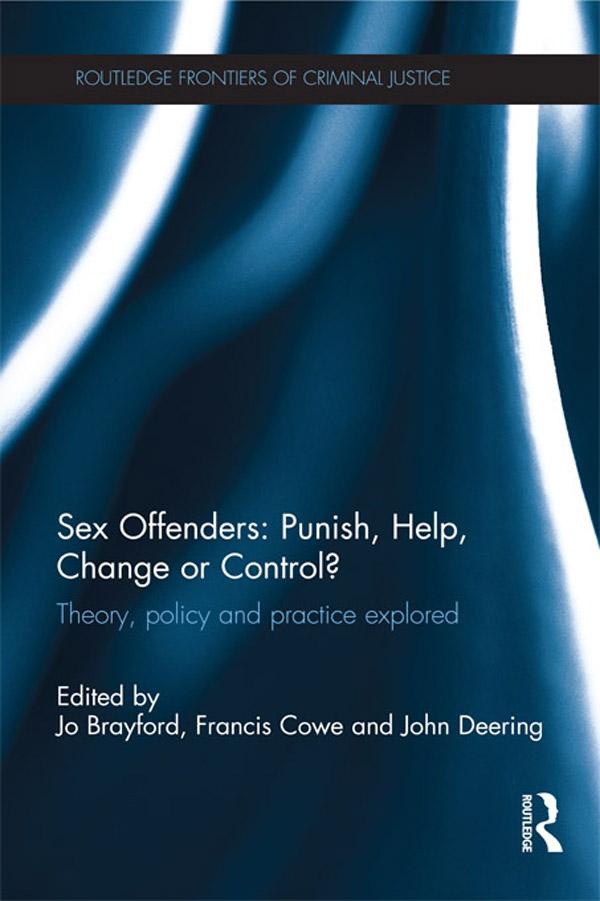
Sex offending, and in particular child sex offending, is a complex area for policy makers, theorists and practitioners. A focus on punishment has reinforced sex offending as a problem that is essentially ‘other’ to society and discourages engagement with the real scale and scope of sexual offending in the UK. This book looks at the growth of work with sex offenders, questioning assumptions about the range and types of such offenders and what effective responses to these might be.
Divided into four sections, this book sets out the growth of a broad legislative context and the emergence of child sexual offenders in criminal justice policy and practice. It goes on to consider a range of offences and victim typologies arguing that work with offenders and victims is complex and can provide a rich source of theoretical and practical knowledge that should be utilised more fully by both policy makers and practitioners. It includes work on female sex offenders, electronic monitoring and animal abuse as well as exploring interventions with sex offenders in three different contexts; prisons, communities and hostels.
Bringing together academic, practice and policy experts, the book argues that a clear but complex theoretical and policy approach is required if the risk of re- offending and further victimisation is to be reduced. Ultimately, this book questions whether it makes sense to locate responsibility for responding to sexual offending solely within the criminal justice domain.
Pay easily by card, Klarna, Apple Pay or Google Pay. Not happy? You always have a 14-day money-back guarantee. Read more in our terms. If you have any questions, email us at hello@memmo.org.
Memmo makes studying easier – wherever you are in the world. We bring your course books and smart study tools together in one place: summaries, quizzes, podcasts and flashcards. Plus Ted, your study buddy who answers anything you wonder. Over 50,000 students already study here – built to help you learn faster and stress less.