
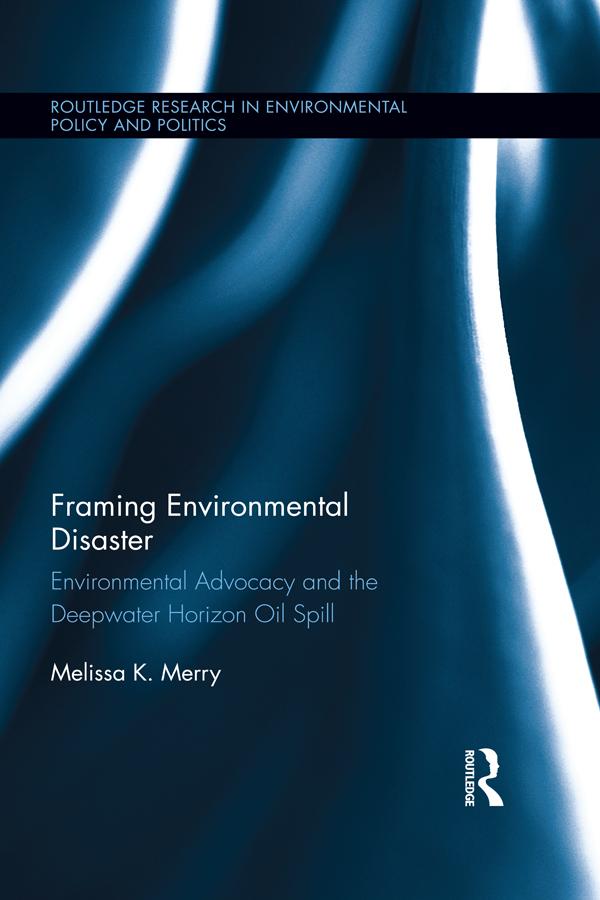
The blowout of the Deepwater Horizon and subsequent underground oil spill in the Gulf of Mexico in 2010 is considered by many to be the worst environmental disaster in U.S. history. Interest groups, public officials, and media organizations have spent considerable time documenting the economic and ecological impacts of this spill as well as the causes of the spill, ostensibly to prevent future disasters of this magnitude. However, rather than an unbiased search for answers, such investigations involve strategic efforts by a variety of political actors to define the spill and its causes in ways that lead to their preferred policy solutions.
Framing Environmental Disaster evaluates the causal stories that environmental groups tell about the spill and develops theoretical propositions about the role of such stories in the policy process. Which actors do groups hold responsible, and how do groups use blame attributions to advance their policy agendas? Constructing a creative methodological approach which includes content analysis drawn from blog posts, emails, press releases, and testimony before Congress and insights and quotations drawn from interviews with environmental group representatives, Melissa K. Merry argues that interest groups construct causal explanations long before investigations of policy problems are complete and use focusing events to cast blame for a wide range of harms not directly tied to the events themselves. In doing so, groups seek to take full advantage of “windows of opportunity” resulting from crises.
An indispensable resource for scholars of public policy and environmental politics and policy, this book sheds new light on the implications of the gulf disaster for energy politics and policies while advancing scholarly understandings of the role of framing and causal attribution in the policy process.
Pay easily by card, Klarna, Apple Pay or Google Pay. Not happy? You always have a 14-day money-back guarantee. Read more in our terms. If you have any questions, email us at hello@memmo.org.
Memmo makes studying easier – wherever you are in the world. We bring your course books and smart study tools together in one place: summaries, quizzes, podcasts and flashcards. Plus Ted, your study buddy who answers anything you wonder. Over 50,000 students already study here – built to help you learn faster and stress less.