
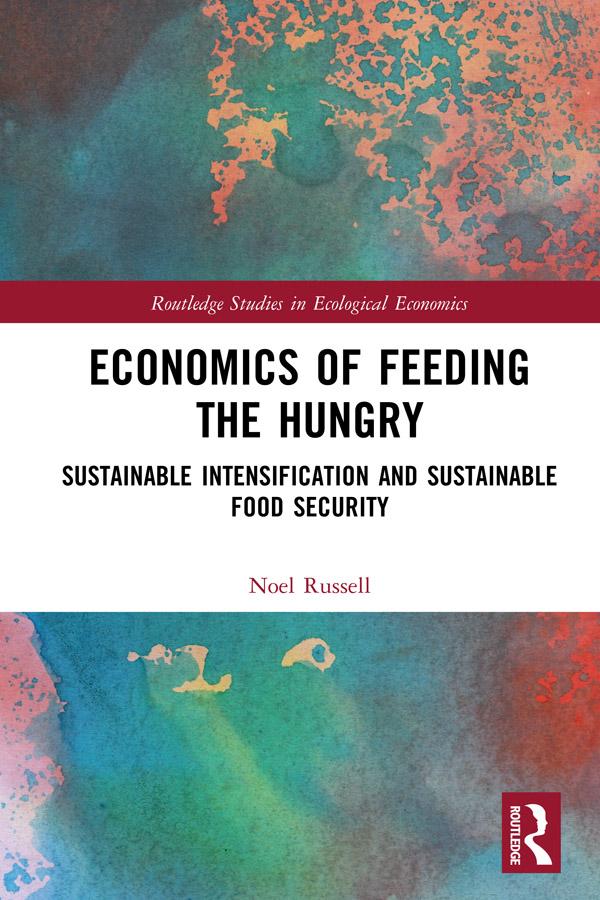
As productivity expands to cater for population increase and shifting diets, many individuals remain hungry, whilst others suffer obesity, and significant amounts of food are wasted. Yet, this triple dilemma oversimplifies the underlying complexity. This book explores this complexity from an economics perspective, looking at the processes involved and the institutional structures that direct and constrain their interaction.
After discussing alternative approaches to measuring hunger and food insecurity, this volume considers the four dimensions of food security: availability, affordability, utilization and stability. In summarising the main debates, issues and policy interventions, Russell discusses the problems of ensuring sufficient food in the face of ever-slowing growth in productivity and constraints on land and water. The problems of food affordability, the need for safety nets, and the need for poverty alleviation measures that reach excluded and disadvantaged groups is also discussed. This is alongside an exploration of issues related to food utilization and the problems of hidden hunger, obesity, food waste, and the interventions needed to relieve these problems.
This volume is of great interest to those who study rural development, ecological economics and development economics, as well as policy makers who seek a better understanding of underlying processes, ongoing and emerging issues, and potentially relevant interventions.
Pay easily by card, Klarna, Apple Pay or Google Pay. Not happy? You always have a 14-day money-back guarantee. Read more in our terms. If you have any questions, email us at hello@memmo.org.
Memmo makes studying easier – wherever you are in the world. We bring your course books and smart study tools together in one place: summaries, quizzes, podcasts and flashcards. Plus Ted, your study buddy who answers anything you wonder. Over 50,000 students already study here – built to help you learn faster and stress less.