
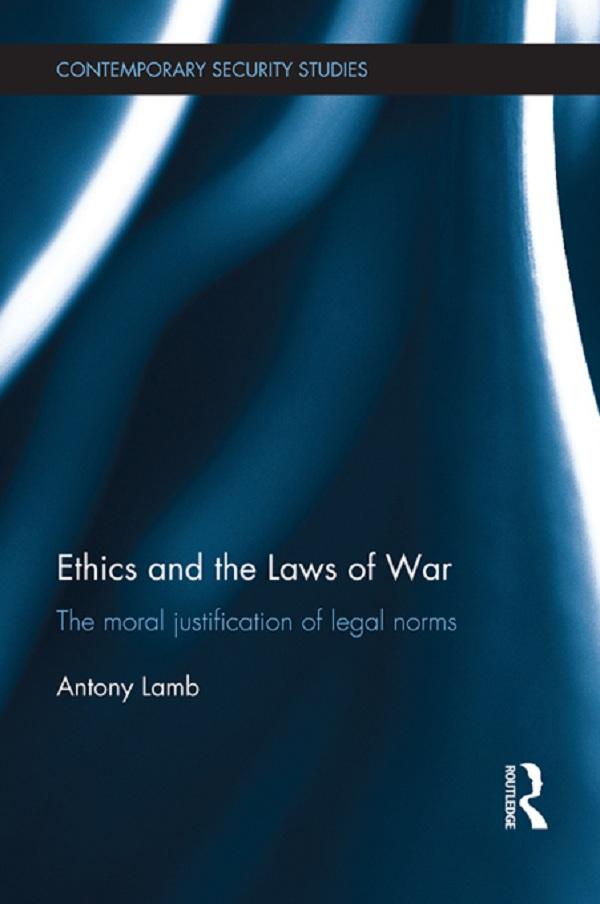
This book is an examination of the permissions, prohibitions and obligations found in just war theory, and the moral grounds for laws concerning war.
Pronouncing an action or course of actions to be prohibited, permitted or obligatory by just war theory does not thereby establish the moral grounds of that prohibition, permission or obligation; nor does such a pronouncement have sufficient persuasive force to govern actions in the public arena. So what are the moral grounds of laws concerning war, and what ought these laws to be?
Adopting the distinction between jus ad bellum and jus in bello, the author argues that rules governing conduct in war can be morally grounded in a form of rule-consequentialism of negative duties. Looking towards the public rules, the book argues for a new interpretation of existing laws, and in some cases the implementation of completely new laws. These include recognising rights of encompassing groups to necessary self-defence; recognising a duty to rescue; and considering all persons neither in uniform nor bearing arms as civilians and therefore fully immune from attack, thus ruling out ‘targeted’ or ‘named’ killings.
This book will be of much interest to students of just war theory, ethics of war, international law, peace and conflict studies, and Security Studies/IR in general.
Pay easily by card, Klarna, Apple Pay or Google Pay. Not happy? You always have a 14-day money-back guarantee. Read more in our terms. If you have any questions, email us at hello@memmo.org.
Memmo makes studying easier – wherever you are in the world. We bring your course books and smart study tools together in one place: summaries, quizzes, podcasts and flashcards. Plus Ted, your study buddy who answers anything you wonder. Over 50,000 students already study here – built to help you learn faster and stress less.