
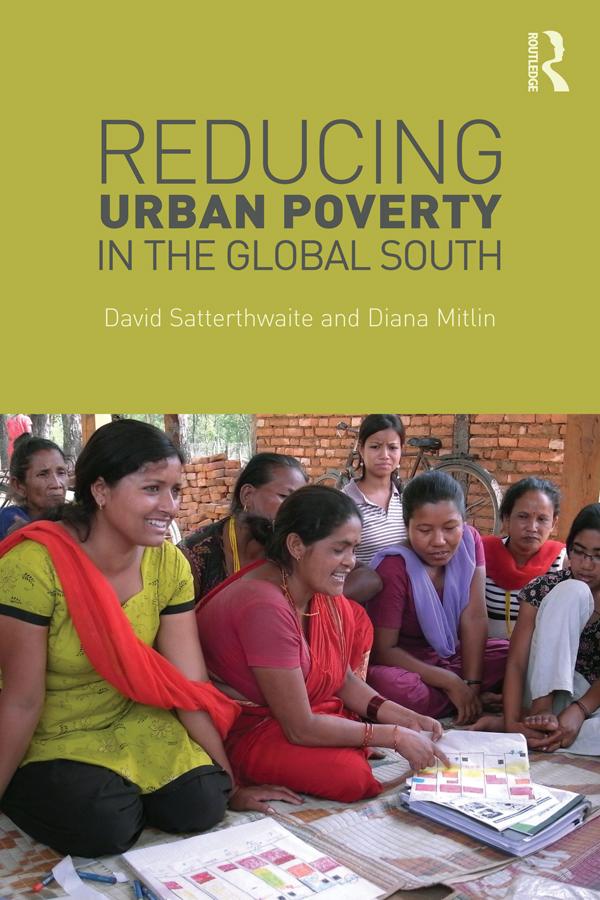
Urban areas in the Global South now house most of the world’s urban population and are projected to house almost all its increase between now and 2030. There is a growing recognition that the scale of urban poverty has been overlooked – and that it is increasing both in numbers and in the proportion of the world’s poor population that live and work in urban areas.
This is the first book to review the effectiveness of different approaches to reducing urban poverty in the Global South. It describes and discusses the different ways in which national and local governments, international agencies and civil society organizations are seeking to reduce urban poverty. Different approaches are explored, for instance; market approaches, welfare, rights-based approaches and technical/professional support. The book also considers the roles of clientelism and of social movements. Case studies illustrate different approaches and explore their effectiveness. Reducing Urban Poverty in the Global South also analyses the poverty reduction strategies developed by organized low-income groups especially those living in informal settlements. It explains how they and the federations or networks they have formed have demonstrated new approaches that have challenged adverse political relations and negotiated more effective support. Local and national governments and international agencies can become far more effective at addressing urban poverty at scale by, as is proposed in this book, working with and supporting the urban poor and their organizations.
This book will be an invaluable resource for researchers and postgraduate students in urban development, poverty reduction, urban geography, and for practitioners and organisations working in urban development programmes in the Global South.
Pay easily by card, Klarna, Apple Pay or Google Pay. Not happy? You always have a 14-day money-back guarantee. Read more in our terms. If you have any questions, email us at hello@memmo.org.
Memmo makes studying easier – wherever you are in the world. We bring your course books and smart study tools together in one place: summaries, quizzes, podcasts and flashcards. Plus Ted, your study buddy who answers anything you wonder. Over 50,000 students already study here – built to help you learn faster and stress less.