
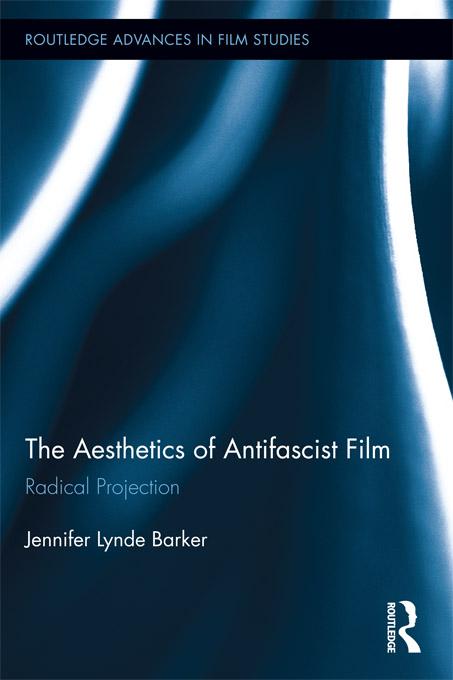
Through a series of detailed film case histories ranging from The Great Dictator to Hiroshima mon amour to The Lives of Others, The Aesthetics of Antifascist Film: Radical Projection explores the genesis and recurrence of antifascist aesthetics as it manifests in the WWII, Cold War and Post-Wall historical periods.
Emerging during a critical moment in film history—1930s/1940s Hollywood— cinematic antifascism was representative of the international nature of antifascist alliances, with the amalgam of film styles generated in émigré Hollywood during the WWII period reflecting a dialogue between an urgent political commitment to antifascism and an equally intense commitment to aesthetic complexity. Opposed to a fascist aesthetics based on homogeneity, purity and spectacle, these antifascist films project a radical beauty of distortion, heterogeneity, fragmentation and loss. By juxtaposing documentation and the modernist techniques of surrealism and expressionism, the filmmakers were able to manifest a non-totalizing work of art that still had political impact.
Drawing on insights from film and cultural studies, aesthetic and ethical philosophy, and socio-political theory, this book argues that the artistic struggles with political commitment and modernist strategies of representation during the 1930s and 40s resulted in a distinctive, radical aesthetic form that represents an alternate strand of post-modernism.
Pay easily by card, Klarna, Apple Pay or Google Pay. Not happy? You always have a 14-day money-back guarantee. Read more in our terms. If you have any questions, email us at hello@memmo.org.
Memmo makes studying easier – wherever you are in the world. We bring your course books and smart study tools together in one place: summaries, quizzes, podcasts and flashcards. Plus Ted, your study buddy who answers anything you wonder. Over 50,000 students already study here – built to help you learn faster and stress less.