
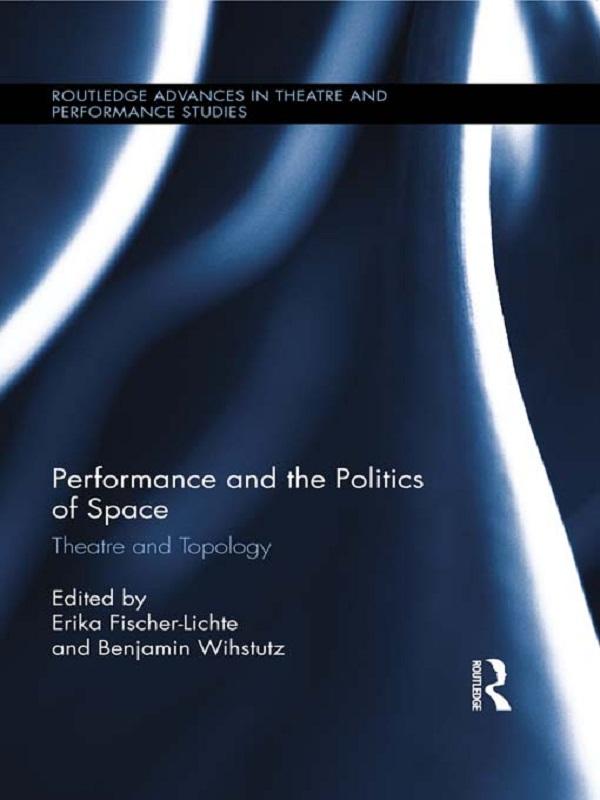
From its very beginnings, theatre has been both an art and a public space, shared by actors and spectators. As a result, its entity and history is intimately tied to politics: a politics of inclusion and exclusion, of distributions and placements, of spatial appropriation and utopian concepts. This collection examines what is at stake when a theatrical space is created and when a performance takes place; it asks under what circumstances the topology of theatre becomes political.
The book approaches this issue from various angles, taking theatre as a cultural paradigm for political dimensions of space in its respective historical context. Visiting the political dimensions of theatrical space in both theatre history and contemporary performance, the volume responds to the so-called spatial turn in cultural and historical studies, and questions a politics of aesthetics that is discussed in continental philosophy. The book visits different levels and linkages between aesthetic theory and geography, art and sociology, architecture and political theory, and geometry and history, shedding new light on theatre, politics, and space, thereby transforming this historically intertwined triad into a transdisciplinary theme.
Pay easily by card, Klarna, Apple Pay or Google Pay. Not happy? You always have a 14-day money-back guarantee. Read more in our terms. If you have any questions, email us at hello@memmo.org.
Memmo makes studying easier – wherever you are in the world. We bring your course books and smart study tools together in one place: summaries, quizzes, podcasts and flashcards. Plus Ted, your study buddy who answers anything you wonder. Over 75,000 students already study here – built to help you learn faster and stress less.