
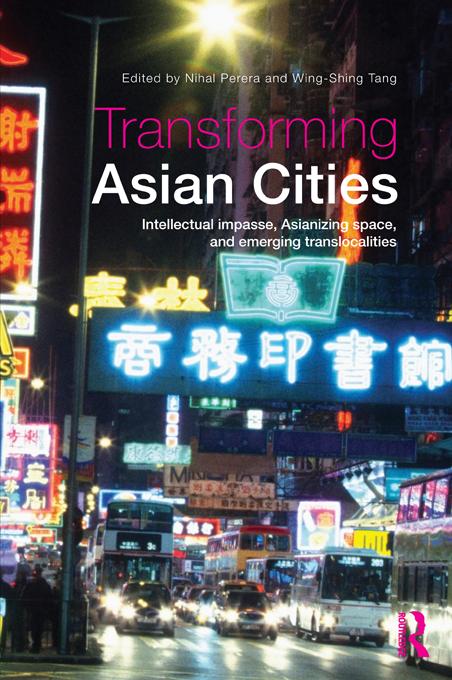
While there is no lack of studies on Asian cities, the majority focus on financial districts, poverty, the slum, tradition, tourism, and pollution, and use the modern, affluent, and transforming Western city as the reference point. This vast Asian empirical presence is not complemented by a theoretical presence; academic discourses overlook common and basic urban processes, particularly the production of space, place, and identity by ordinary citizens.
Switching the vantage point to Asian cities and citizens, Transforming Asian Cities draws attention to how Asians produce their contemporary urban practices, identities, and spaces as part of resisting, responding to, and avoiding larger global and national processes. Instead of viewing Asian cities in opposition to the Western city and using it as the norm, this book instead opts to provincialize mainstream and traditional knowledge. It argues that the vast terrain of ordinary actors and spaces which are currently left out should be reflected in academic debates and policy decisions, and the local thinking processes that constitute these spaces need to be acknowledged, enabled, and critiqued.
The individual chapters illustrate that "global" spaces are more (trans)local, traditional environments are more modern, and Asian spaces are better defined than acknowledged. The aim is to develop room for understandings of Asian cities from Asian standpoints, especially acknowledging how Asians observe, interpret, understand, and create space in their cities.
Pay easily by card, Klarna, Apple Pay or Google Pay. Not happy? You always have a 14-day money-back guarantee. Read more in our terms. If you have any questions, email us at hello@memmo.org.
Memmo makes studying easier – wherever you are in the world. We bring your course books and smart study tools together in one place: summaries, quizzes, podcasts and flashcards. Plus Ted, your study buddy who answers anything you wonder. Over 75,000 students already study here – built to help you learn faster and stress less.