
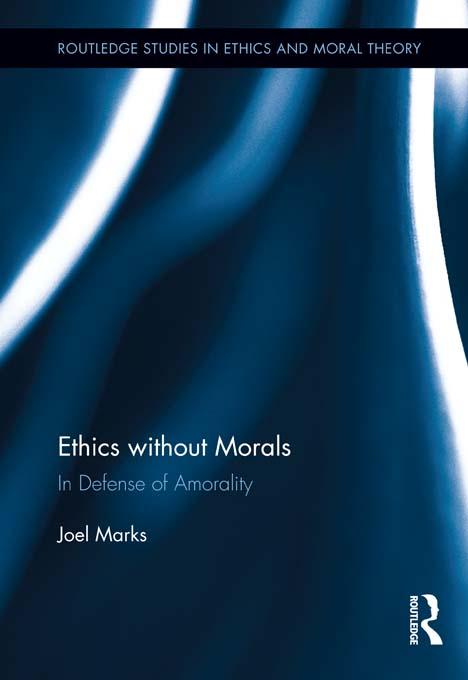
In this volume, Marks offers a defense of amorality as both philosophically justified and practicably livable. In so doing, the book marks a radical departure from both the new atheism and the mainstream of modern ethical philosophy. While in synch with their underlying aim of grounding human existence in a naturalistic metaphysics, the book takes both to task for maintaining a complacent embrace of morality. Marks advocates wiping the slate clean of outdated connotations by replacing the language of morality with a language of desire.
The book begins with an analysis of what morality is and then argues that the concept is not instantiated in reality. Following this, the question of belief in morality is addressed: How would human life be affected if we accepted that morality does not exist? Marks argues that at the very least, a moralist would have little to complain about in an amoral world, and at best we might hope for a world that was more to our liking overall. An extended look at the human encounter with nonhuman animals serves as an illustration of amorality’s potential to make both theoretical and practical headway in resolving heretofore intractable ethical problems.
Pay easily by card, Klarna, Apple Pay or Google Pay. Not happy? You always have a 14-day money-back guarantee. Read more in our terms. If you have any questions, email us at hello@memmo.org.
Memmo makes studying easier – wherever you are in the world. We bring your course books and smart study tools together in one place: summaries, quizzes, podcasts and flashcards. Plus Ted, your study buddy who answers anything you wonder. Over 50,000 students already study here – built to help you learn faster and stress less.