
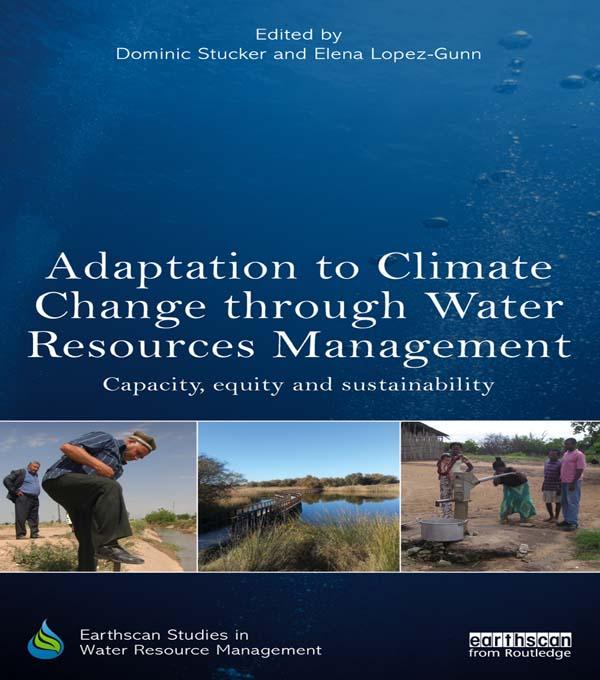
The impacts of human-induced climate change are largely mediated by water, such as alterations in precipitation and glacial melt patterns, variations in river flow, increased occurrence of droughts and floods, and sea level rise in densely populated coastal areas. Such phenomena impact both urban and rural communities in developed, emerging, and developing countries.
Taking a systems approach, this book analyzes evidence from 26 countries and identifies common barriers and bridges for local adaptation to climate change through water resources management. It includes a global set of case studies from places experiencing increased environmental and social pressure due to population growth, development and migration, including in Africa, Asia, Australia, Europe, North and South America.
All chapters consider the crosscutting themes of adaptive capacity, equity, and sustainability. These point to resilient water allocation policies and practices that are capable of protecting social and environmental interests, whilst ensuring the efficient use of an often-scarce resource.
Pay easily by card, Klarna, Apple Pay or Google Pay. Not happy? You always have a 14-day money-back guarantee. Read more in our terms. If you have any questions, email us at hello@memmo.org.
Memmo makes studying easier – wherever you are in the world. We bring your course books and smart study tools together in one place: summaries, quizzes, podcasts and flashcards. Plus Ted, your study buddy who answers anything you wonder. Over 50,000 students already study here – built to help you learn faster and stress less.