
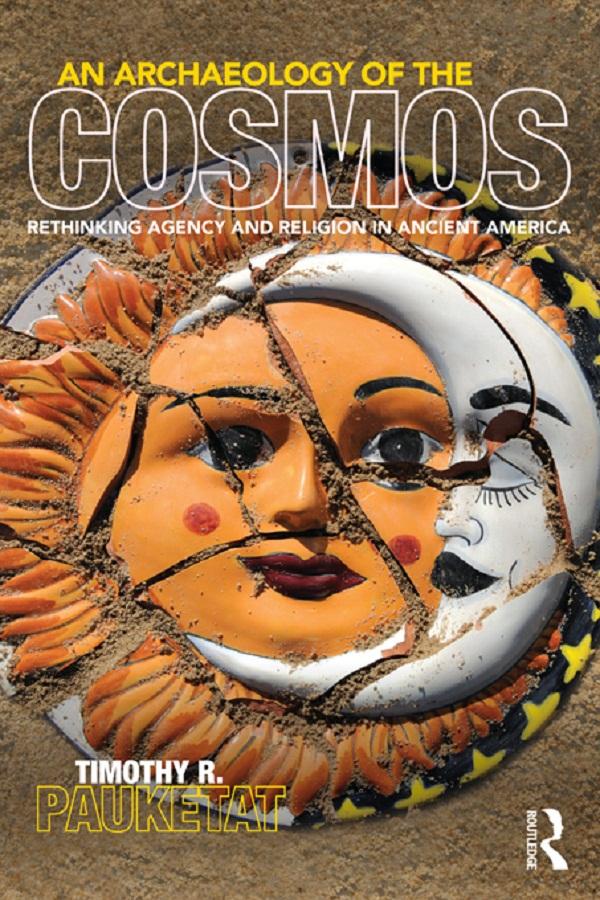
An Archaeology of the Cosmos seeks answers to two fundamental questions of humanity and human history. The first question concerns that which some use as a defining element of humanity: religious beliefs. Why do so many people believe in supreme beings and holy spirits? The second question concerns changes in those beliefs. What causes beliefs to change?
Using archaeological evidence gathered from ancient America, especially case material from the Great Plains and the pre-Columbian American Indian city of Cahokia, Timothy Pauketat explores the logical consequences of these two fundamental questions. Religious beliefs are not more resilient than other aspects of culture and society, and people are not the only causes of historical change.
An Archaeology of the Cosmos examines the intimate association of agency and religion by studying how relationships between people, places, and things were bundled together and positioned in ways that constituted the fields of human experience. This rethinking theories of agency and religion provides readers with challenging and thought provoking conclusions that will lead them to reassess the way they approach the past.
Pay easily by card, Klarna, Apple Pay or Google Pay. Not happy? You always have a 14-day money-back guarantee. Read more in our terms. If you have any questions, email us at hello@memmo.org.
Memmo makes studying easier – wherever you are in the world. We bring your course books and smart study tools together in one place: summaries, quizzes, podcasts and flashcards. Plus Ted, your study buddy who answers anything you wonder. Over 75,000 students already study here – built to help you learn faster and stress less.