
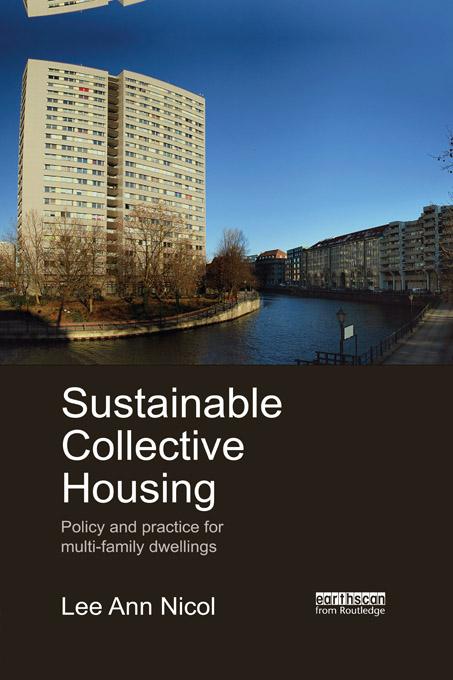
Housing stocks provide much more than just shelter. Energy suppliers, pension fund managers and public transit providers are but a few of the many stakeholders that have a regulated interest in the non-shelter goods and services offered by housing. Such stakeholders and their activities are traditionally addressed on a sectoral basis, yet regulations that are designed to apply to one often have unintended effects on another, effects that may produce negative pressure on the housing stock – and the wider built environment – in terms of sustainability.
Sustainable Collective Housing presents a new and comprehensive approach to the study of the regulations pertaining to housing: the institutional regimes framework. By considering the housing stock as a resource, this framework enables the ensemble of public policies, property rights and contracts that govern all shelter and non-shelter uses of housing to be identified, analyzed and evaluated. Using examples from Switzerland, Germany and Spain, this book describes the regulatory conditions that must be in place before housing sustainability issues can be effectively tackled. The book will provide policy-makers, housing stock owners and other stakeholders with the knowledge and tools to make rational and legitimate decisions regarding housing sustainability.
Pay easily by card, Klarna, Apple Pay or Google Pay. Not happy? You always have a 14-day money-back guarantee. Read more in our terms. If you have any questions, email us at hello@memmo.org.
Memmo makes studying easier – wherever you are in the world. We bring your course books and smart study tools together in one place: summaries, quizzes, podcasts and flashcards. Plus Ted, your study buddy who answers anything you wonder. Over 75,000 students already study here – built to help you learn faster and stress less.