
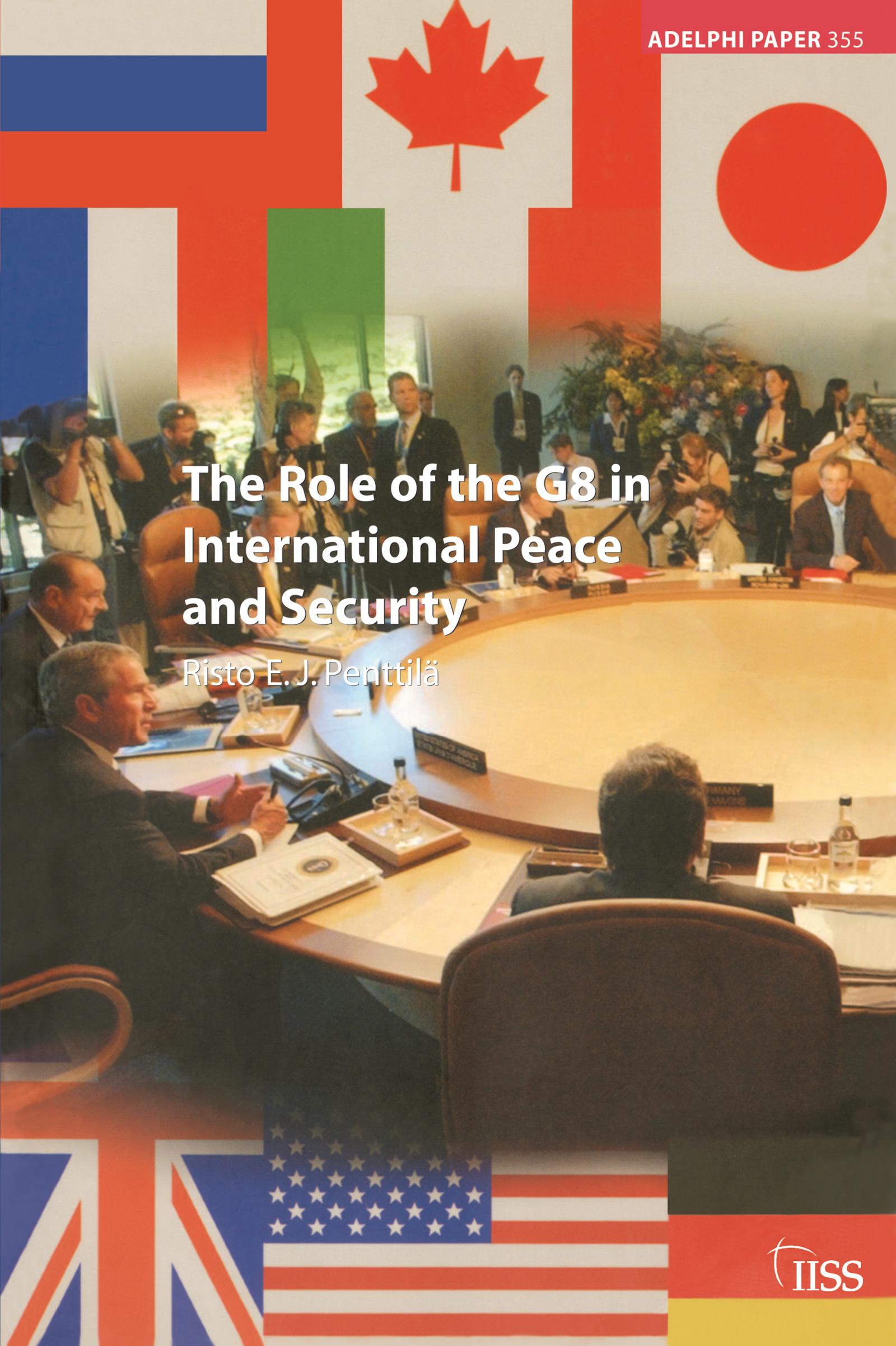
This Adelphi Paper is the first concise yet comprehensive analysis of the role of the G8 in international peace and security. It argues that the G7/8 has a long and impressive history in the field of international security. The G7/8 has, for example, spearheaded the introduction of "low politics" and "soft security" to the top table of great power diplomacy and integrated Japan and, later Russia, into the realm of Western security discussions. In questions of war and peace the G8 does not command the legitimacy of the UN Security Council but, for the international community, is a more acceptable vehicle than unilateral action. As such the G8 can be seen as a note-worthy "second best" option after the UN Security Council.
This Paper further argues that China should be admitted into the G8 first as an observer and later as a member. There is also a strong argument for the European Union to have one seat at the G8 even if such a change does not seem realistic today. The G8 bears great resemblance to the 19th century Concert of Europe. Whether it will assume a similar role in the 21st century depends in the final analysis on whether the United States welcomes such a role for the G8.
Pay easily by card, Klarna, Apple Pay or Google Pay. Not happy? You always have a 14-day money-back guarantee. Read more in our terms. If you have any questions, email us at hello@memmo.org.
Memmo makes studying easier – wherever you are in the world. We bring your course books and smart study tools together in one place: summaries, quizzes, podcasts and flashcards. Plus Ted, your study buddy who answers anything you wonder. Over 50,000 students already study here – built to help you learn faster and stress less.