
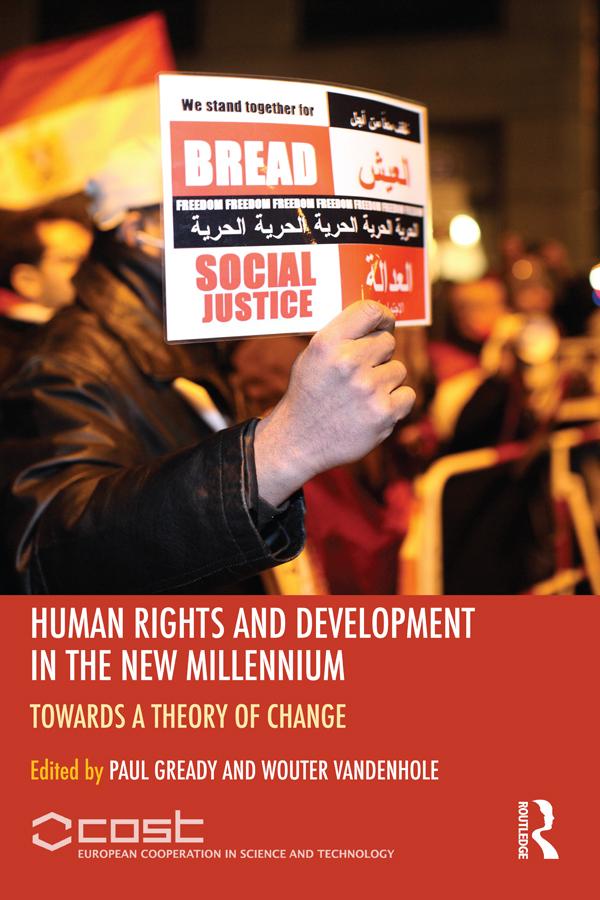
In recent years human rights have assumed a central position in the discourse surrounding international development, while human rights agencies have begun to more systematically address economic and social rights. This edited volume brings together distinguished scholars to explore the merging of human rights and development agendas at local, national and international levels. They examine how this merging affects organisational change, operational change and the role of relevant actors in bringing about change. With a focus on practice and policy rather than pure theory, the volume also addresses broader questions such as what human rights and development can learn from one another, and whether the connections between the two fields are increasing or declining.
The book is structured in three sections:
- Part I looks at approaches that combine human rights and development, including chapters on drivers of change; indicators; donor; and legal empowerment of the poor.
- Part II focuses on organisational contexts and includes chapters on the UN at the country level; EU development cooperation; PLAN’s children’s rights-based approach; and ActionAid’s human rights-based approach.
- Part III examines country contexts, including chapters on the ILO in various settings; the Congo; Ethiopia; and South Africa.
Human Rights and Development in the new Millennium: Towards a Theory of Change will be of strong interest to students and scholars of human rights, development studies, political science and economics.
Pay easily by card, Klarna, Apple Pay or Google Pay. Not happy? You always have a 14-day money-back guarantee. Read more in our terms. If you have any questions, email us at hello@memmo.org.
Memmo makes studying easier – wherever you are in the world. We bring your course books and smart study tools together in one place: summaries, quizzes, podcasts and flashcards. Plus Ted, your study buddy who answers anything you wonder. Over 50,000 students already study here – built to help you learn faster and stress less.