
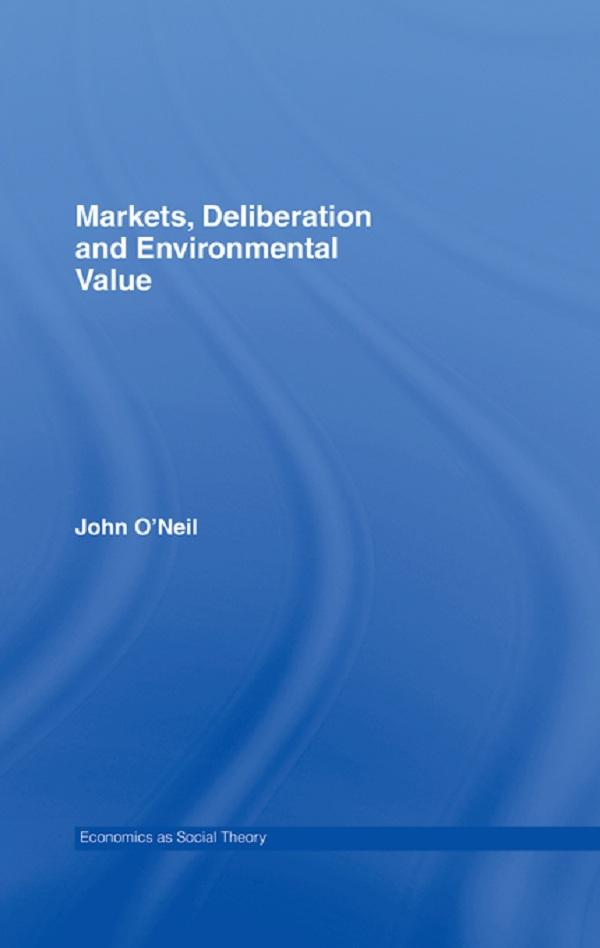
What is the source of our environmental problems? Why is there in modern societies a persistent tendency to environmental damage? From within neoclassical economic theory there is a straightforward answer to those questions: it is because environmental goods and harms are unpriced. They come free.
This position runs up against a view which runs in entirely the opposite direction, that our environmental problems have their source not in a failure to apply market norms rigorously enough, but in the very spread of these market mechanisms and norms. The source of environmental problems lies in part in the spread of markets both in real geographical terms across the globe and through the introduction of markets mechanisms and norms into spheres of life that previously have been protected from markets.
In this book, John O’Neill conducts a thorough examination of these two opposing viewpoints covering a discussion of the ethical boundaries of markets, the role of private property rights in environmental protection, the nature of sustainability and the valuation of goods over time.
This book is essential reading for undergraduate and postgraduate students studying courses in ecological and environmental economics.
Pay easily by card, Klarna, Apple Pay or Google Pay. Not happy? You always have a 14-day money-back guarantee. Read more in our terms. If you have any questions, email us at hello@memmo.org.
Memmo makes studying easier – wherever you are in the world. We bring your course books and smart study tools together in one place: summaries, quizzes, podcasts and flashcards. Plus Ted, your study buddy who answers anything you wonder. Over 50,000 students already study here – built to help you learn faster and stress less.