
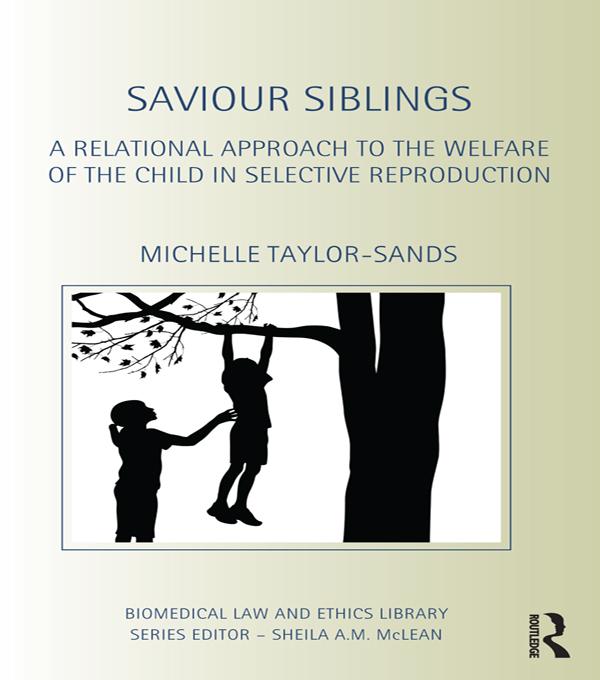
Genetic screening technologies involving pre-implantation genetic diagnosis (PGD) raise particular issues about selective reproduction and the welfare of the child to be born. How does selection impact on the identity of the child who is born? Are children who are selected for a particular purpose harmed or treated as commodities? How far should the state interfere with parents’ reproductive choices?
Currently, concerns about the welfare of the child in selective reproduction have focused on the individual interests of the child to be born. This book re-evaluates the welfare of the child through the controversial topic of saviour sibling selection. Drawing on relational feminist and communitarian ethics, Michelle Taylor-Sands argues that the welfare of the child to be born is inextricably linked with the welfare of his/her family. The author proposes a relational model for selective reproduction based on a broad conception of the welfare of the child that includes both individual and collective family interests. By comparing regulation in the UK and Australia, the book maps out how law and policy might support a relational model for saviour sibling selection.
With an interdisciplinary focus, Saviour Siblings: A Relational Approach to the Welfare of the Child in Selective Reproduction will be of particular interest to academics and students of bioethics and law as well as practitioners and policymakers concerned with the ethics of selective reproduction.
Pay easily by card, Klarna, Apple Pay or Google Pay. Not happy? You always have a 14-day money-back guarantee. Read more in our terms. If you have any questions, email us at hello@memmo.org.
Memmo makes studying easier – wherever you are in the world. We bring your course books and smart study tools together in one place: summaries, quizzes, podcasts and flashcards. Plus Ted, your study buddy who answers anything you wonder. Over 50,000 students already study here – built to help you learn faster and stress less.