
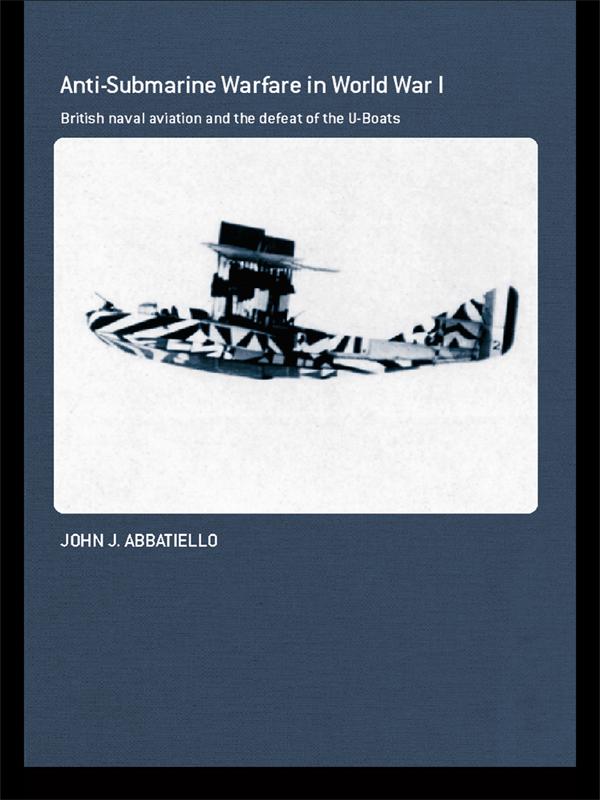
Investigating the employment of British aircraft against German submarines during the final years of the First World War, this new book places anti-submarine campaigns from the air in the wider history of the First World War.
The Royal Naval Air Service invested heavily in aircraft of all types—aeroplanes, seaplanes, airships, and kite balloons—in order to counter the German U-boats. Under the Royal Air Force, the air campaign against U-boats continued uninterrupted. Aircraft bombed German U-boat bases in Flanders, conducted area and ‘hunting’ patrols around the coasts of Britain, and escorted merchant convoys to safety. Despite the fact that aircraft acting alone destroyed only one U-boat during the war, the overall contribution of naval aviation to foiling U-boat attacks was significant. Only five merchant vessels succumbed to submarine attack when convoyed by a combined air and surface escort during World War I.
This book examines aircraft and weapons technology, aircrew training, and the aircraft production issues that shaped this campaign. Then, a close examination of anti-submarine operations—bombing, patrols, and escort—yields a significantly different judgment from existing interpretations of these operations. This study is the first to take an objective look at the writing and publication of the naval and air official histories as they told the story of naval aviation during the Great War. The author also examines the German view of aircraft effectiveness, through German actions, prisoner interrogations, official histories, and memoirs, to provide a comparative judgment. The conclusion closes with a brief narrative of post-war air anti-submarine developments and a summary of findings.
Overall, the author concludes that despite the challenges of organization, training, and production the employment of aircraft against U-boats was largely successful during the Great War.
This book will be of interest to historians of naval and air power history, as well as students of World War I and military history in general.
Pay easily by card, Klarna, Apple Pay or Google Pay. Not happy? You always have a 14-day money-back guarantee. Read more in our terms. If you have any questions, email us at hello@memmo.org.
Memmo makes studying easier – wherever you are in the world. We bring your course books and smart study tools together in one place: summaries, quizzes, podcasts and flashcards. Plus Ted, your study buddy who answers anything you wonder. Over 50,000 students already study here – built to help you learn faster and stress less.