
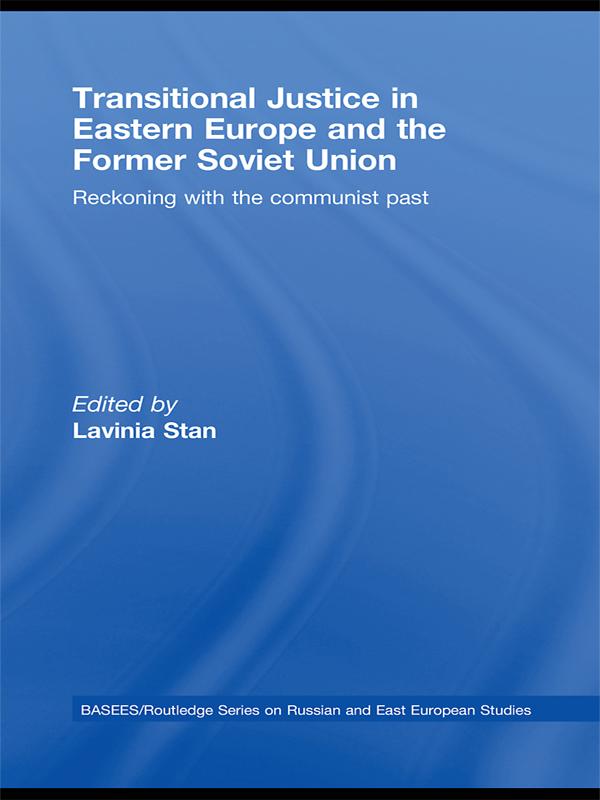
During the last two decades, the countries of Eastern Europe and the former Soviet Union have attempted to address the numerous human rights abuses that characterized the decades of communist rule. This book examines the main processes of transitional justice that permitted societies in those countries to come to terms with their recent past. It explores lustration, the banning of communist officials and secret political police officers and informers from post-communist politic, ordinary citizens’ access to the remaining archives compiled on them by the communist secret police, as well as trials and court proceedings launched against former communist officials and secret agents for their human rights trespasses. Individual chapters explore the progress of transitional justice in Germany, the Czech Republic, Slovakia, Poland, Hungary, Romania, Bulgaria, Albania, Slovenia and the successor states of the former Soviet Union. The chapters explain why different countries have employed different models to come to terms with their communist past; assess each country’s relative successes and failures; and probe the efficacy of country-specific legislation to attain the transitional justice goals for which it was developed. The book draws together the country cases into a comprehensive comparative analysis of the determinants of post-communist transitional justice, that will be relevant not only to scholars of post-communist transition, but also to anyone interested in transitional justice in other contexts.
Pay easily by card, Klarna, Apple Pay or Google Pay. Not happy? You always have a 14-day money-back guarantee. Read more in our terms. If you have any questions, email us at hello@memmo.org.
Memmo makes studying easier – wherever you are in the world. We bring your course books and smart study tools together in one place: summaries, quizzes, podcasts and flashcards. Plus Ted, your study buddy who answers anything you wonder. Over 50,000 students already study here – built to help you learn faster and stress less.