
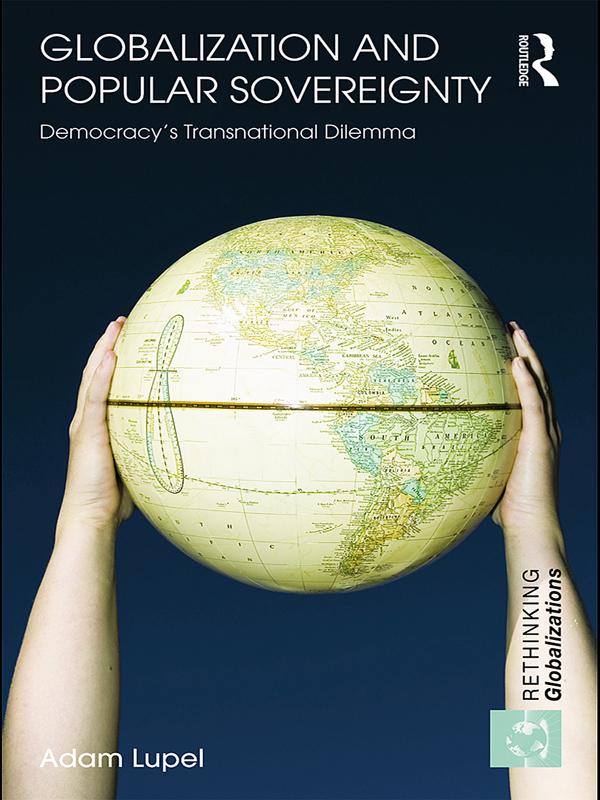
This volume analyzes the impact of globalization on the concept of popular sovereignty and rethinks it for the transnational domain. It explores how popular sovereignty has historically determined the form of democratic citizenship and how democratic citizenship and legitimacy can be conceived in the transnational sphere in the absence of a global sovereign order. By inquiring into the new global context of popular sovereignty, the book seeks to better understand the emerging structures of global governance and their potential for democratic legitimacy. Lupel argues:
- That the challenges of globalization necessitate a rethinking of the concept of popular sovereignty beyond the domain of the nation-state
- That such a rethinking reveals a tension between the particularism of democratic legitimacy and the universalism of cosmopolitan politics
- Critical attention to the constitutive processes of global governance must become an integral part of democratic theory in the context of globalization; and a transnational model of popular sovereignty provides the best resources for this purpose.
This book will be of interest to students and scholars of globalization, democratic theory and international relations theory.
Pay easily by card, Klarna, Apple Pay or Google Pay. Not happy? You always have a 14-day money-back guarantee. Read more in our terms. If you have any questions, email us at hello@memmo.org.
Memmo makes studying easier – wherever you are in the world. We bring your course books and smart study tools together in one place: summaries, quizzes, podcasts and flashcards. Plus Ted, your study buddy who answers anything you wonder. Over 50,000 students already study here – built to help you learn faster and stress less.