
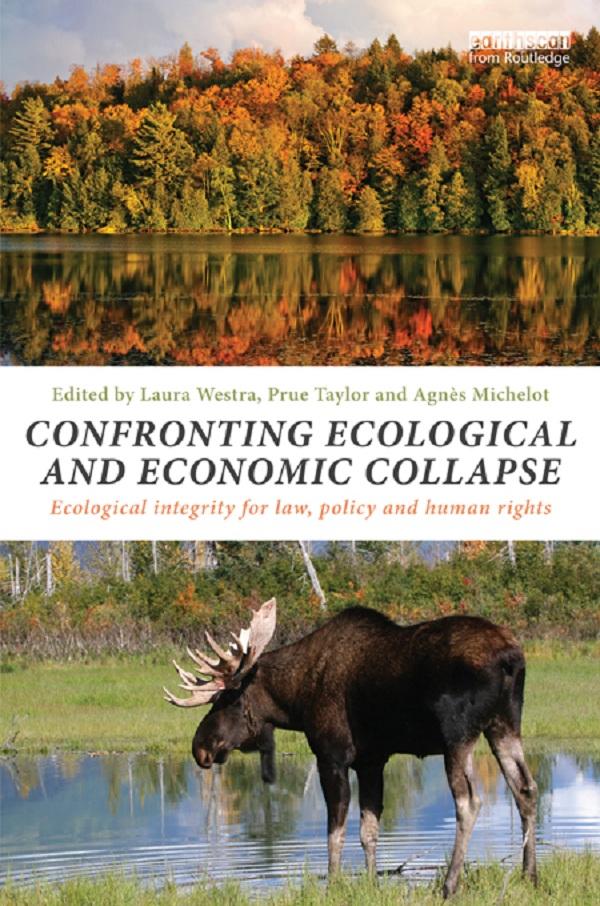
From the first appearance of the term in law in the Clean Water Act of 1972 (US), ecological integrity has been debated by a wide range of researchers, including biologists, ecologists, philosophers, legal scholars, doctors and epidemiologists, whose joint interest was the study and understanding of ecological/biological integrity from various standpoints and disciplines. This volume discusses the need for ecological integrity as a major guiding principle in a variety of policy areas, to counter the present ecological and economic crises with their multiple effects on human rights.
The book celebrates the 20th anniversary of the Global Ecological Integrity Group and reassesses the basic concept of ecological integrity in order to show how a future beyond catastrophe and disaster is in fact possible, but only if civil society and ultimately legal regimes acknowledge the necessity to consider ecointegrity as a primary factor in decision-making. This is key to the support of basic rights to clean air and water, for halting climate change, and also the basic rights of women and indigenous people. As the authors clearly show, all these rights ultimately depend upon accepting policies that acknowledge the pivotal role of ecological integrity.
Pay easily by card, Klarna, Apple Pay or Google Pay. Not happy? You always have a 14-day money-back guarantee. Read more in our terms. If you have any questions, email us at hello@memmo.org.
Memmo makes studying easier – wherever you are in the world. We bring your course books and smart study tools together in one place: summaries, quizzes, podcasts and flashcards. Plus Ted, your study buddy who answers anything you wonder. Over 50,000 students already study here – built to help you learn faster and stress less.