
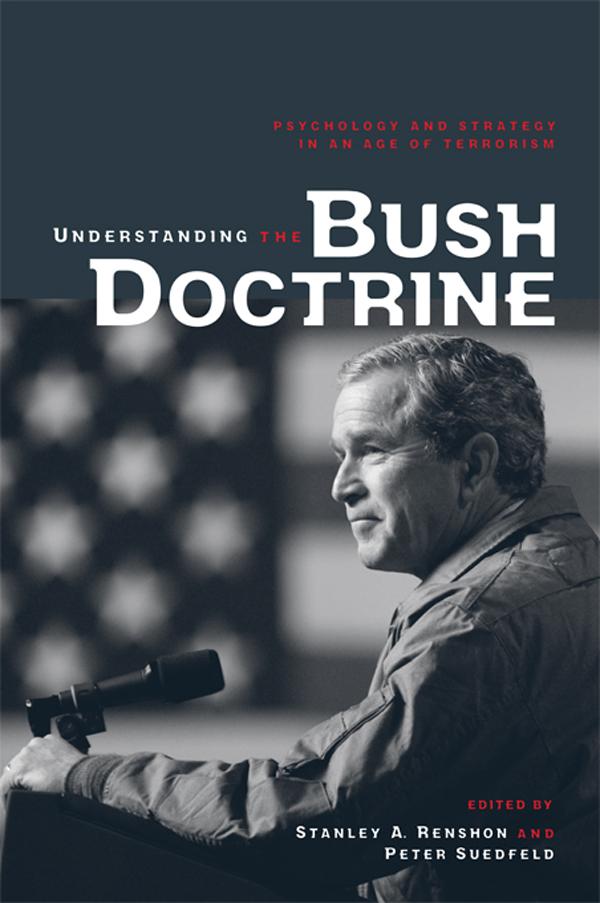
In this volume, leading scholars of U.S. foreign policy, international relations, and political psychology examine one of the most consequential and controversial statements of national security policy in contemporary American history. Unlike other books which focus only on unilateralism or preventive war, Stanley A. Renshon and Peter Suedfeld provide a comprehensive framework with which to analyze the Bush Doctrine by identifying five central and interrelated elements of the doctrine:
- American pre-eminence
- assertive realism
- equivocal alliances
- selective multilateralism
- democratic transformation.
Given its centrality to American national security, and the fact that the effects of it are likely to be felt well into the twenty-first century, Understanding the Bush Doctrine provides a critically balanced and pointed assessment of the Bush Doctrine and its premises, as well as a fair appraisal of its implications and prospects.
Pay easily by card, Klarna, Apple Pay or Google Pay. Not happy? You always have a 14-day money-back guarantee. Read more in our terms. If you have any questions, email us at hello@memmo.org.
Memmo makes studying easier – wherever you are in the world. We bring your course books and smart study tools together in one place: summaries, quizzes, podcasts and flashcards. Plus Ted, your study buddy who answers anything you wonder. Over 50,000 students already study here – built to help you learn faster and stress less.