
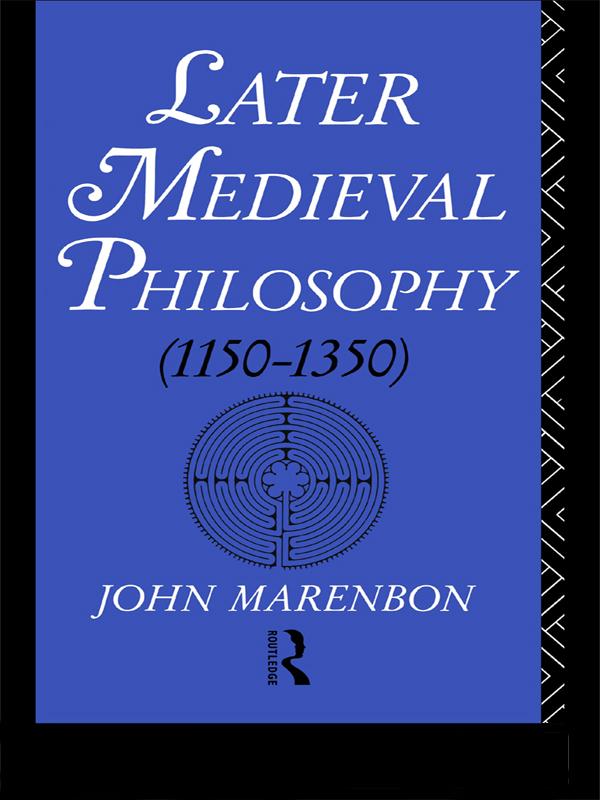
This introduction to philosophy in the Latin West between 1150 and 1350 combines an historical approach, which concentrates on the sources, forms and backgrounds of the medieval works, with philosophical analysis of thirteenth and fourteenth-century writing in terms comprehensible to a modern reader. Part One looks at the intellectual and historical context of medieval thought. It examines the courses in the medieval universities; the methods of teaching; the forms of written work; the logical techniques used for argument and analysis; the translation and the availability of Ancient Greek, Arab and Jewish philosophical texts; the challenges the new material presented and the various ways in which Western thinkers responded to them. Part Two focuses on one important problem in later medieval thought: the nature of intellectual knowledge. It explains the arguments given by Aristotle, his antique commentators and the Arab philosophers Avicenna and Averroes, and traces how a series of Western thinkers, including Thomas Aquinas and William of Ockham, developed, modified or rejected them.
Pay easily by card, Klarna, Apple Pay or Google Pay. Not happy? You always have a 14-day money-back guarantee. Read more in our terms. If you have any questions, email us at hello@memmo.org.
Memmo makes studying easier – wherever you are in the world. We bring your course books and smart study tools together in one place: summaries, quizzes, podcasts and flashcards. Plus Ted, your study buddy who answers anything you wonder. Over 50,000 students already study here – built to help you learn faster and stress less.
You might also like
Buy the book0