
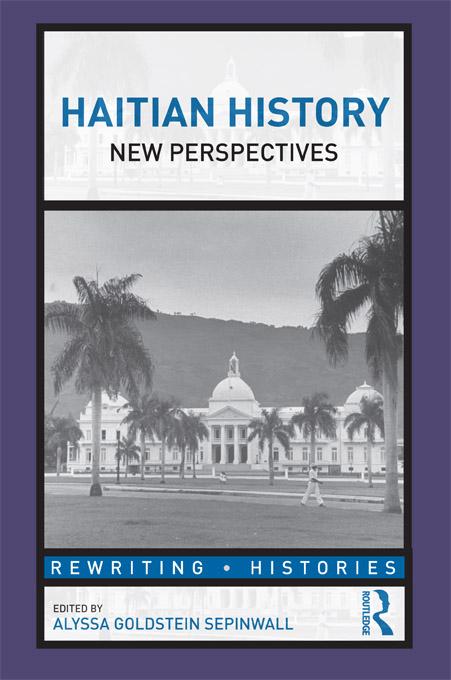
Despite Haiti's proximity to the United States, and its considerable importance to our own history, Haiti barely registered in the historic consciousness of most Americans until recently. Those who struggled to understand Haiti's suffering in the earthquake of 2010 often spoke of it as the poorest country in the Western hemisphere, but could not explain how it came to be so.
In recent years, the amount of scholarship about the island has increased dramatically. Whereas once this scholarship was focused on Haiti’s political or military leaders, now the historiography of Haiti features lively debates and different schools of thought. Even as this body of knowledge has developed, it has been hard for students to grasp its various strands. Haitian History presents the best of the recent articles on Haitian history, by both Haitian and foreign scholars, moving from colonial Saint Domingue to the aftermath of the 2010 earthquake. It will be the go-to one-volume introduction to the field of Haitian history, helping to explain how the promise of the Haitian Revolution dissipated, and presenting the major debates and questions in the field today.
Pay easily by card, Klarna, Apple Pay or Google Pay. Not happy? You always have a 14-day money-back guarantee. Read more in our terms. If you have any questions, email us at hello@memmo.org.
Memmo makes studying easier – wherever you are in the world. We bring your course books and smart study tools together in one place: summaries, quizzes, podcasts and flashcards. Plus Ted, your study buddy who answers anything you wonder. Over 50,000 students already study here – built to help you learn faster and stress less.