
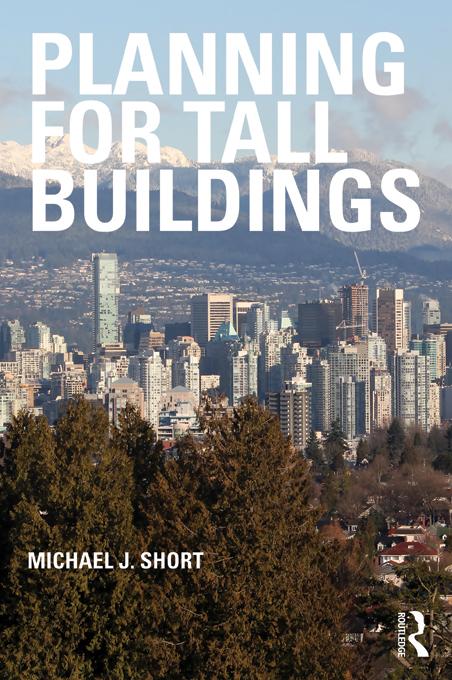
In a time of recession, the challenge of building and planning for tall buildings has become even more complex; the economics of development, legislative and planning frameworks, and the local politics of development must be navigated by those wishing to design and construct new tall buildings which fit within the fabric of their host cities.
This book is a timely contribution to the debate about new tall buildings and their role and effect on our cities. It is divided into two main parts. In part one, the relationship between tall buildings and planning is outlined, followed by an exploration of the impacts that construction of tall buildings can have. It focuses, in particular, on the conservation debates that proposals for new tall buildings raise. The first part ends with an analysis of the way in which planning strategies have evolved to deal with the unique consequences of tall buildings on their urban locations. The second part of the book focuses on seven examples of medium-sized cities dealing with planning and conservation issues, and implications that arise from tall buildings. These have been chosen to reflect a wide range of methods to either encourage or to control tall buildings that cities are deploying. The case studies come from across the western world, covering England (Manchester, Liverpool, Newcastle and Birmingham), Norway (Oslo), Ireland (Dublin) and Canada (Vancouver) and represent a broad spectrum of approaches to dealing with this issue.
In drawing together the experiences of these varied cities, the book contributes to the ongoing debate about the role of the tall building in our cities, their potential impacts, and experiences of those who use and inhabit them. The conclusions outline how cities should approach the strategic planning of tall buildings, as well as how they should deal with the consequences of individual buildings, particularly on the built heritage.
Pay easily by card, Klarna, Apple Pay or Google Pay. Not happy? You always have a 14-day money-back guarantee. Read more in our terms. If you have any questions, email us at hello@memmo.org.
Memmo makes studying easier – wherever you are in the world. We bring your course books and smart study tools together in one place: summaries, quizzes, podcasts and flashcards. Plus Ted, your study buddy who answers anything you wonder. Over 75,000 students already study here – built to help you learn faster and stress less.