
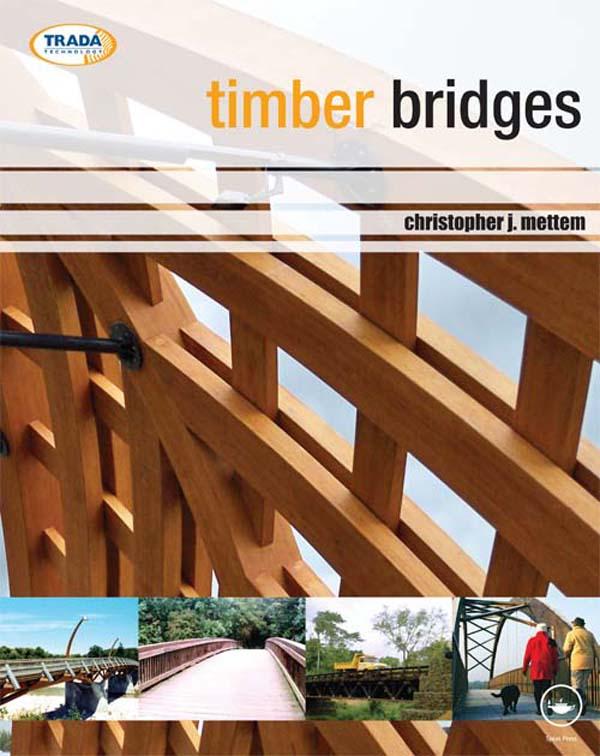
Bridges built in timber are enjoying a significant revival, both for pedestrian and light traffic and increasingly for heavier loadings and longer spans. Timber's high strength-to-weight ratio, combined with the ease and speed of construction inherent in the off-site prefabrication methods used, make a timber bridge a suitable option in many different scenarios.
This handbook gives technical guidance on forms, materials, structural design and construction techniques suitable for both small and large timber bridges. Eurocode 5 Part Two (BS EN 1995-2) for the first time provides an international standard for the construction of timber bridges, removing a potential obstacle for engineers where timber construction for bridges has not – in recent centuries at least – been usual.
Clearly illustrated throughout, this guide explains how to make use of this oldest construction material in a modern context to create sustainable, aesthetically pleasing, practical and durable bridges. Worldwide examples include Tourand Creek Bridge, Canada; Toijala, Finland; Punt la Resgia, Switzerland; Pont de Crest, France; Almorere Pylon Bridge, the Netherlands.
Pay easily by card, Klarna, Apple Pay or Google Pay. Not happy? You always have a 14-day money-back guarantee. Read more in our terms. If you have any questions, email us at hello@memmo.org.
Memmo makes studying easier – wherever you are in the world. We bring your course books and smart study tools together in one place: summaries, quizzes, podcasts and flashcards. Plus Ted, your study buddy who answers anything you wonder. Over 50,000 students already study here – built to help you learn faster and stress less.